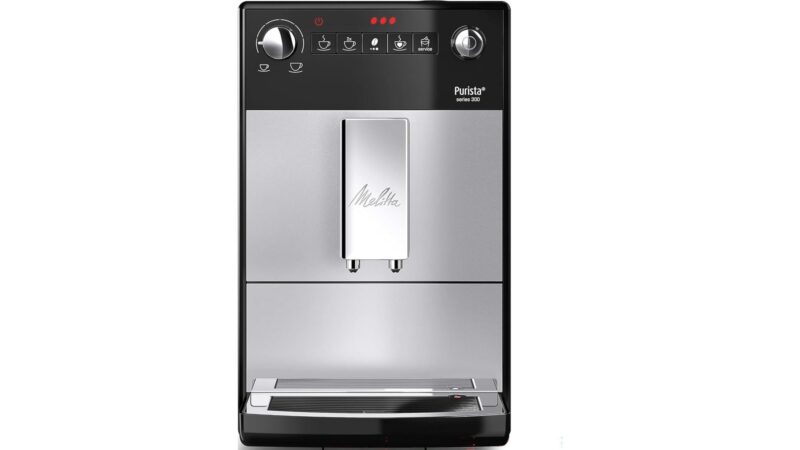
Most bean-to-cup machines are the size of a small microwave, which is fine until you try to fit one next to the kettle, the toaster and a bread bin in a rented flat. The Melitta Purista goes the other way. It’s 20cm wide, and Melitta bills it as one of the smallest automatic espresso machines in the world. I can’t vouch for “in the world”, but it’s narrow enough to be the reason people buy it.
So is a slim machine a good idea, or do you pay for the missing width somewhere else? You do pay, and it’s mostly in water. This review draws on the specs in the Amazon UK listing and on what owners report, including some who’ve had theirs for years. We haven’t had one on our own worktop.
At a glance
- Best for: one or two people who drink espresso or black coffee, and have a narrow gap on the worktop close to a sink
- Top feature: fresh-ground coffee from a machine only 20cm wide, with a grinder owners keep calling quiet
- Watch out for: a small water tank, a shallow drip tray that fills quickly, and a real minority of reliability complaints
- Skip if: you want milk drinks at a button press, or you make several big mugs in a row every morning
What it actually does
The Purista is a fully automatic machine with no milk system at all. There’s no carafe and no steam wand. Beans go in, and espresso or a longer coffee comes out. A large dial sets the volume anywhere from 25ml to 220ml, and there are three strength settings and five grind settings. A “favourite” button stores the strength and volume you like, so you don’t have to set them every morning.
The twin spouts adjust for height and can fill two cups at once. Retailer spec sheets put the pump at 15 bar. Melitta’s own selling point is pre-wetting the grounds before brewing, which it calls the Aroma Extraction System. I’d treat that name as marketing, but owners’ comments about the coffee are consistently good, so whatever it’s doing seems to work.
The numbers that matter in a small kitchen
- Width: 20cm
- Depth: 45.5cm
- Height: 32.5cm in the listing (one Melitta manual for a sister model says 33.4cm, so allow for the bigger figure)
- Weight: 7.9kg
- Water tank: 1.2 litres
- Bean compartment: 125g
- Cable: 1m
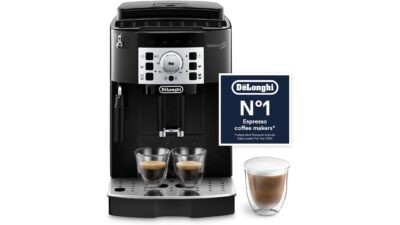
Width is the headline, but depth is the number to measure. The Purista gets its slim front by being long, and 45.5cm takes up most of a standard 60cm worktop once you’ve allowed for the plug behind it. One owner says it’s deeper front to back than they expected. For comparison, the De’Longhi Magnifica S is listed at about 24cm wide and 9kg, so you’re saving a few centimetres and a little weight. It’s a small difference on paper, but in a gap that really is 22cm wide, it’s the difference between fitting and not fitting.
The 1m cable is short too, so check where your socket is before you pick a spot.
What owners like
- The coffee. This is the most common praise by a distance. People mention proper crema and a range from gentle to, as one owner cheerfully puts it, eye-wateringly strong.
- The noise, or lack of it. Melitta markets the grinder as ultra-quiet, and owners mostly back that up, though one finds it a bit noisy at times. If you get up before the rest of the house in winter, this is a bigger deal than it sounds.
- Having no milk system to clean. Several buyers chose it for this exact reason. Fewer parts touching milk means less daily washing up.
- Speed. One owner says it takes under a minute from wanting a coffee to having one.
- The ones that last. A reviewer who bought theirs in July 2021 says it’s still going after more than five years of daily use.
A few owners also mention buying it after it did well in Which? testing, which is worth knowing, though it isn’t something we’ve checked against Which? ourselves.
What owners don’t like
- The water tank empties fast. This is the big one. The machine rinses itself when you switch it on and off, and that water comes out of the same small tank. One owner who drinks mugs of around 250ml says they only get two per fill, and they’re properly annoyed about it. Another reckons on topping up after three or four coffees.
- The drip tray is shallow. All that rinse water ends up in it, so it needs emptying often, and it’s awkward to carry to the sink without slopping. One owner compares its capacity to a pod machine’s. Another simply calls the Purista “very needy”, which is hard to argue with.
- Reliability is mixed. It averages 4.1 stars from 1,730 ratings, and 12% of those are one star. That’s a higher share than the 7% on its sister machine, the Melitta Solo, and Amazon’s review summary singles out machines that stopped working after a short time. In fairness, one owner whose machine failed after about a year says Melitta arranged a warranty repair that took 24 hours at the repair agent. Keep your receipt.
- Long coffees can be disappointing. Run a lot of water through one dose and it can taste over-extracted. There’s also no separate hot water outlet.
- Setup takes concentration. Owners describe the manual as complicated at first, and a couple prefer the Melitta Companion App, which walks you through setup and maintenance step by step.
Who it’s for
It suits a solo espresso or Americano drinker, or a couple having a coffee each, who has a narrow slot on the worktop near a sink. It’s a good match for anyone who has moved on from pods and doesn’t want the learning curve of a manual machine like the De’Longhi Dedica.
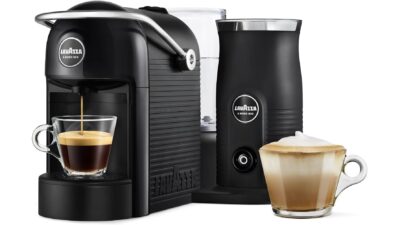
It’s a poor match if the machine will live a long way from the tap, because you’ll be walking the tank and tray back and forth a lot. A household getting through five or six mugs before work will find it tiresome. And if the whole appeal is a cappuccino at one press, look at the Lavazza Jolie & Milk instead. Space-wise, if even this is too much, a capsule machine such as the Nespresso Essenza Mini takes up far less room, though you lose the fresh beans.
Getting the best out of it
- Make Americanos with the kettle. Some owners brew a double espresso and top it up with hot water from the kettle, rather than pushing a full mug’s worth through the coffee. You get a better-tasting drink, and you use far less of the tank.
- Want milk? Buy a separate frother. This is what happy owners do, and it costs you a lot less cleaning. The Aeroccino 3 and the Dualit Milk Frother Max are both small enough to tuck away, and the Dualit piece covers oat milk too.
- Top up from a bottle. One owner keeps a bottle of water by the machine to save taking the tank out each time.
- Don’t over-buy beans. 125g isn’t much, so you’ll be refilling regularly. Keep the rest of the bag sealed, and see our guide to keeping coffee beans fresh.
Cleaning and upkeep
The brew unit comes out and rinses under the tap. One long-term owner does this weekly and wipes out the inside at the same time. Beyond that, the machine shows symbols when it wants cleaning, descaling or a new filter, and it won’t let you forget. Owners describe the cleaning and descaling programmes as multi-step but manageable, especially with the app.
The water filter is the decision that matters. The same owner reports changing it about every two months, and descaling about once a year with a filter, against every two or three months without one. They run a general cleaning cycle with a tablet about every two months as well. Those are one owner’s figures, and yours will depend on your water. If you’re in a hard water area, read our piece on how often to descale a coffee maker. Do follow the manual when you fit a filter, as the machine needs to register it. That owner also mentions other buyers complaining of cracked filter threads, so don’t overtighten it.
Budget for this as an ongoing cost. Filters, tablets and descaler aren’t expensive one at a time, but they do mean a machine like this is never quite a one-off purchase.
FAQ
Can the Melitta Purista make a cappuccino or latte?
Not by itself. It has no steam wand or milk system, so it only makes the coffee. Pair it with a separate frother and you can make both.
Is it really quiet?
Quiet for a bean-to-cup machine, going by most owners, and noise is one of its better-rated points. It still grinds beans, so don’t expect silence. Nobody has published a decibel figure that we could find.
How many coffees do you get from a full tank?
It depends on your cup size and how often you switch it on and off. Owners report anywhere from two big mugs to three or four coffees before a top-up.
Do you have to use the water filter?
No, but owners recommend it, particularly in hard water areas, because it means descaling far less often. Replacement filters are an ongoing cost.
Will it fit under my wall cupboards?
At about 33cm tall it should fit under most, but measure your own gap and leave room above it for topping up the beans. Sliding a 7.9kg machine forward each time isn’t much fun.
The verdict
If your problem is a narrow gap and you drink your coffee black, the Melitta Purista is an easy one to like. It’s mid-range for a bean-to-cup, it’s small, and owners rate the coffee and the low noise. Just go in knowing what the slim body costs: you’ll fill the tank and empty the tray more often than you’d like, and the share of one-star reviews is too high to ignore. Put it near the sink, keep the kettle handy for Americanos, and it’s a nice way to get fresh coffee through a dark winter morning in a small kitchen.