Bake madeleine batter in a bun tin and you’ll get something perfectly nice to eat. It just won’t be a madeleine. You’ll end up with a small round sponge, without the ridges, the thin edges that go crisp, or much of the look that makes people want one.
Those shallow shell moulds do real work. The batter spreads thinly at the edge and sits deeper in the middle, so the rim browns while the centre stays soft. A deep round hole can’t do that. If you want madeleines, you need the tin. If you only want little buttery cakes, save your money and use the muffin tin you’ve got.
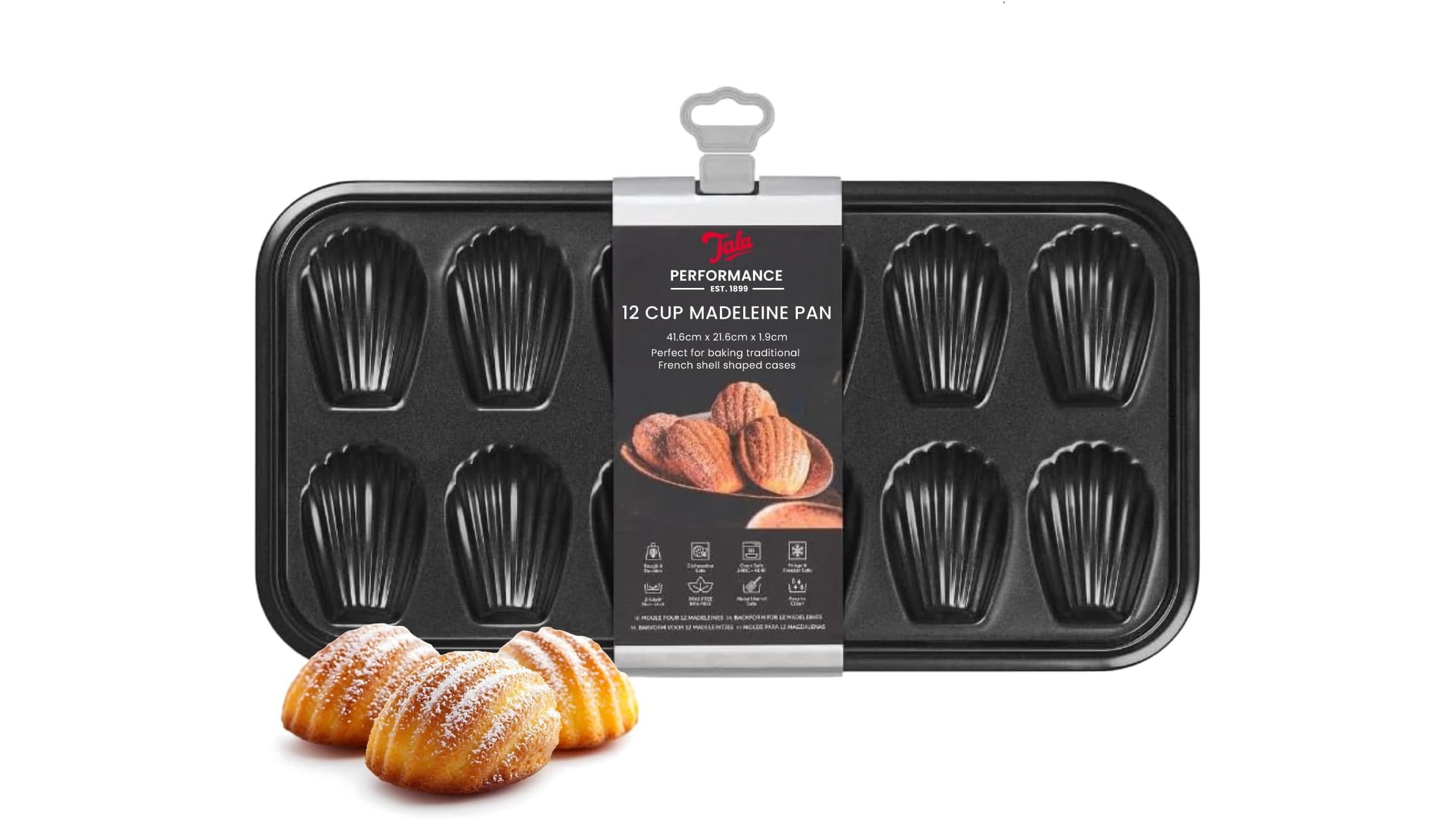
Is it a tin you’ll use more than once?
That’s the honest question, because it does one job. In its favour, madeleines are quick. The batter is a few minutes’ work, they bake in about ten minutes, and a batch of warm ones dusted with icing sugar is a nice thing to bring out on a cold afternoon. They’re also best on the day, so people tend to bake them little and often. And they make a good edible Christmas gift, as long as you bake them close to the day you’re giving them.
It’s a tin that earns its place if you bake most weekends. If you bake twice a year, it’ll spend its life at the back of a cupboard.
Why the Tala
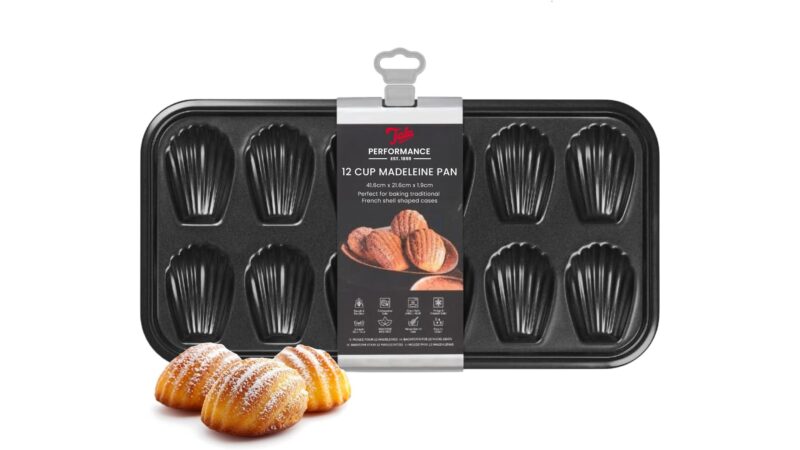
There are plenty of cheap unbranded trays on Amazon, and MasterClass and Lakeland make good ones too. I’d go for the Tala Performance 12 Cup Madeleine Pan, mainly for its weight. It’s heavy carbon steel, 760g for the tin, and a thin tray is more likely to warp in a hot oven and brown unevenly. It has a two-layer Whitford Eclipse non-stick coating and goes up to 240°C, well above anything you’ll bake these at. The listing also says it’s dishwasher safe and backs it with a 10-year guarantee.
The size is a little unclear. Amazon lists it at roughly 40 x 20cm, and the figures printed on the packaging in the photo look slightly bigger. Either way, it’s longer than some baking trays, so measure your oven shelf if you’ve got a compact oven.
The listing also says it’s safe with metal utensils. I still wouldn’t lever cakes out with a knife. Each shell should come away with a sharp tap, and a 10-year guarantee won’t make you feel better about a scratched mould.
Silicone or steel?
Silicone trays are easy to find and easy to store, but silicone doesn’t brown as well as metal. Since the crisp golden edge is most of the point of a madeleine, I’d stick with steel here.
Three things that matter more than the tin
Chill the batter. Most recipes rest it in the fridge for at least an hour, and a cold batter hitting a hot oven is what’s usually credited for that little hump on the back.
Grease it anyway. Non-stick or not, brush each mould with melted butter and dust with a little flour. All those ridges give a sponge plenty to cling to, and it also adds to the flavour of the crust.
Don’t overfill. About three quarters full is enough. Any more and the batter will run over and blur the shell shape. If your batches keep browning too fast or too slowly, an oven thermometer will tell you whether the dial is lying.