Fair question. A standard UK electric kettle is quick and cheap, and it clicks off by itself. A hob kettle does none of that any better, and a lot of the appeal is plain nostalgia. Nobody needs one.
But there are a few cases where I think it’s worth having, and they come up more in winter.
When a hob kettle makes sense
You’ve got gas and you worry about power cuts. When a storm knocks the electricity out, a gas hob can usually still be lit with a match, and that means hot drinks and hot water bottles. It’s a small thing until it’s the only hot thing in the house. It doesn’t help if your hob is induction or electric, of course.
You’ve got an AGA or range that’s on anyway. The heat is there already, and a kettle on the hotplate is how those cookers were meant to be used.
You’d like the counter space back. It can live on the hob, with no base or cable.
You simply like it. A whistle from the next room is a nice sound on a cold morning. That’s a perfectly good reason, though it probably won’t win over whoever else lives with you.
The one to look at
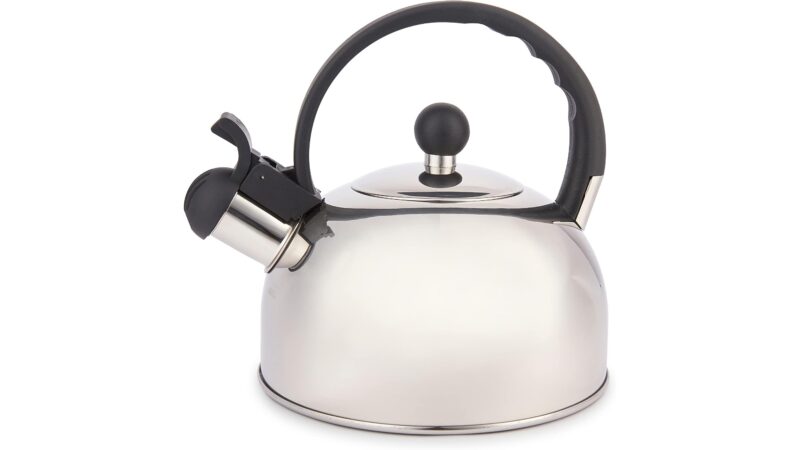
The La Cafetière Whistling Kettle is a plain, polished stainless steel kettle with a sensible spread of hob compatibility. The listing says it works on all hobs, including induction and AGA, and that’s the first thing to check on any stove kettle.
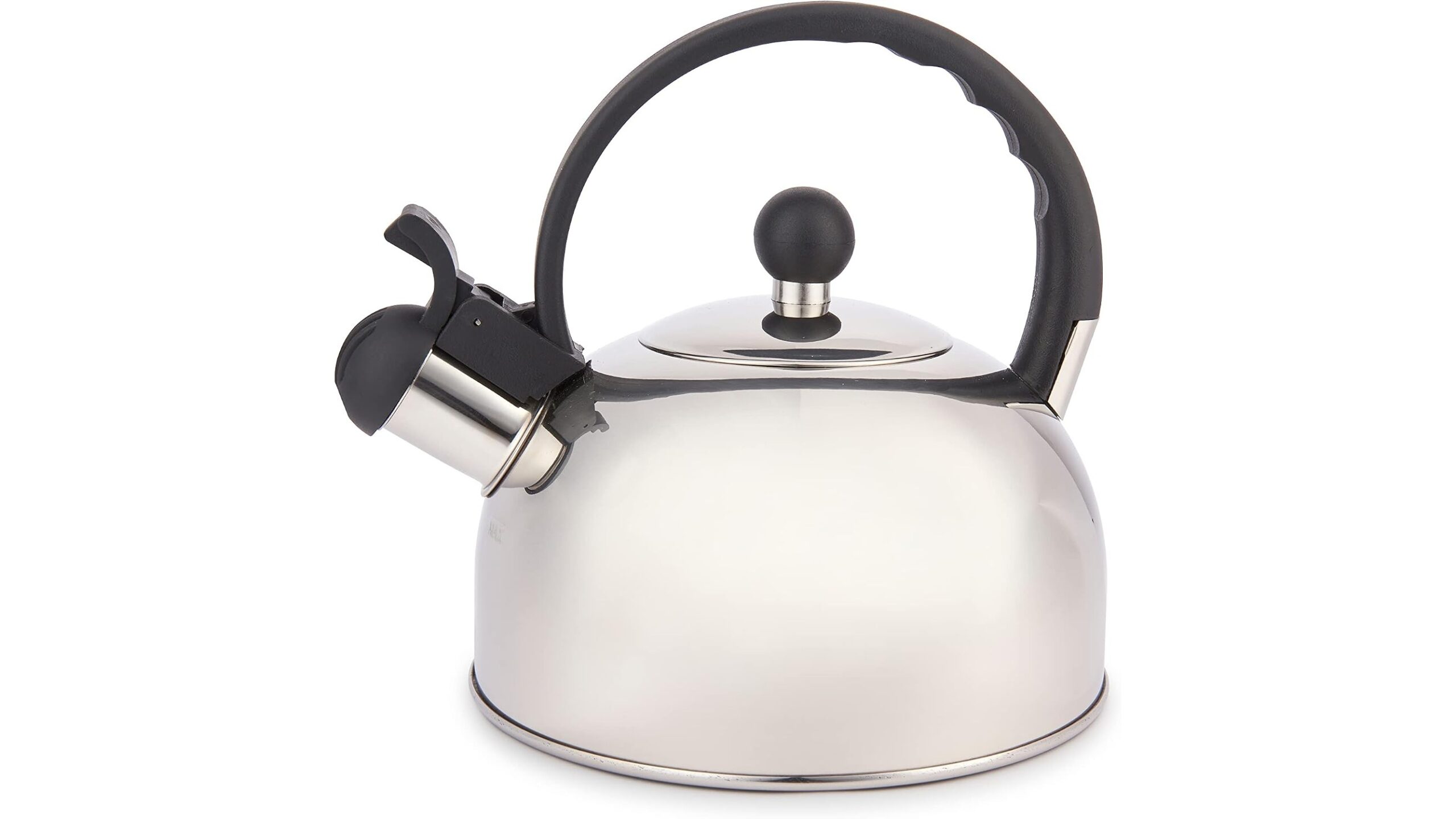
It holds 1.3 litres, which is just over four big mugs, and that makes it smaller than most electric kettles. A houseful at Christmas will have you filling it twice. It measures 18 x 22 x 20.5cm and weighs only 457g empty, which is handy when it’s full, but it also tells you this is a light everyday kettle rather than an heirloom. The whistle flips up out of the way for pouring, the handle is heat-resistant plastic, and you get a 1-year guarantee.
The bits that will annoy you
It won’t turn itself off. That’s the big one. The whistle tells you it’s boiled, but only if you’re in earshot and you actually go and deal with it. If you’re the sort of person who wanders off and forgets things, keep your electric kettle. A kettle left to boil dry can ruin its base, and it isn’t safe.
Steam goes where your hand is. Lift the whistle with its lever, keep your fingers away from the spout, and tip slowly.
Mind the flame. On gas, keep the flame under the base and on the right size of burner, so it isn’t curling up the sides towards that plastic handle.
Cleaning is by hand. The listing says it isn’t dishwasher safe. Limescale builds up in hard water areas as it does in any kettle, and pouring out what’s left after each boil helps slow it down.
If you’re on gas or an AGA and you like the idea, I’d say go for it. It’s a small purchase and it does what it says. If you’re after better coffee, a gooseneck kettle is the one to buy. And if you just want something nice looking on the counter, an electric one like the Smeg is a lot less bother.