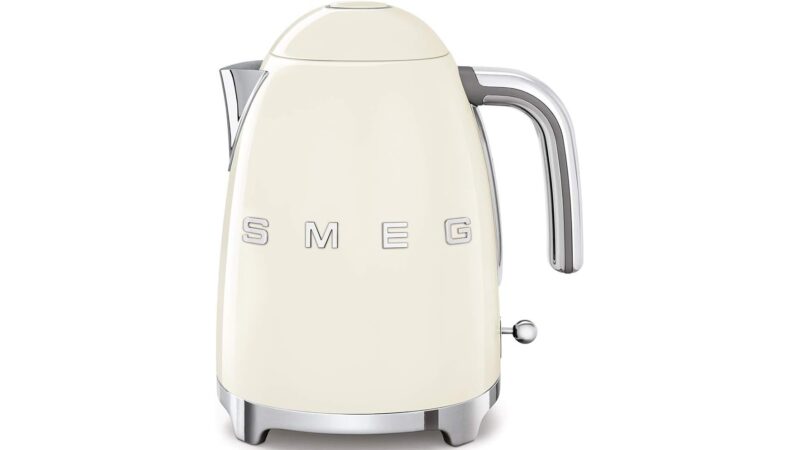
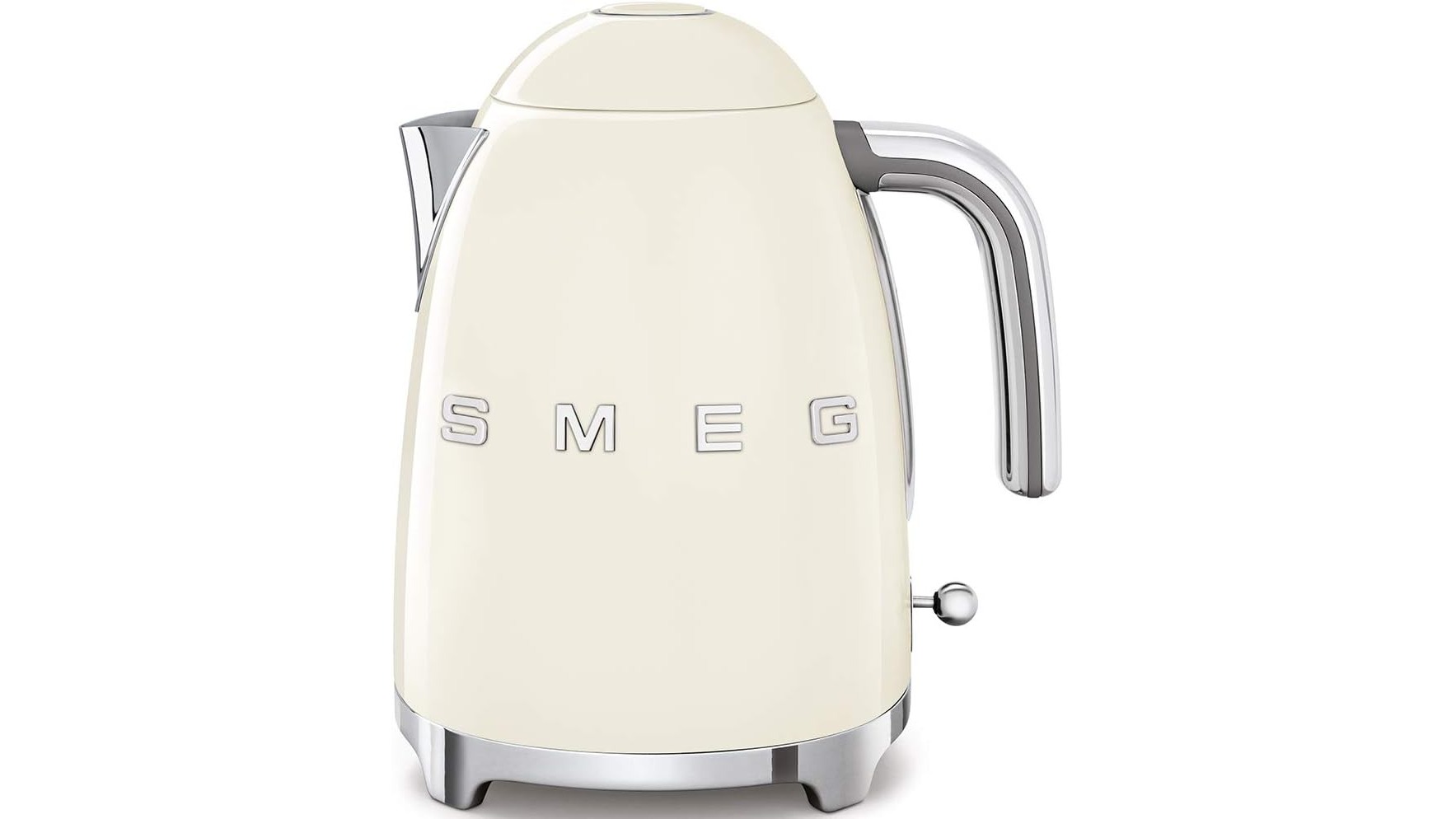
Let’s be honest about why anyone looks at a Smeg kettle. It’s the shape. That rounded 1950s body in cream or pastel blue sits on the worktop like a piece of furniture, and in winter, when the kettle goes on five or six times a day, you look at it a lot.
So the real question isn’t “does it boil water”. Every kettle does. It’s whether there’s anything behind the looks, or whether you’re paying a lot extra for a badge.
What’s actually on the spec sheet
Going by the Smeg KLF03 listing on Amazon UK (the cream KLF03CRUK, though the same kettle comes in a stack of colours):
- 1.7 litre capacity, which is about seven cups
- 3kW element, hidden under the base, so there’s no coil to scale up
- Soft-opening lid that lifts slowly instead of flipping up and spitting steam at you
- Water level indicator
- 360° swivel base and anti-slip feet
- Switches itself off at boiling point
- Removable stainless steel limescale filter that you can wash
None of that is unusual. A supermarket kettle has most of it. The two bits I’d actually miss on a cheaper kettle are the slow lid and the 3kW element. A full kettle at 3kW is noticeably quicker than an older 2.2kW one, and on a cold morning that’s the gap between standing there waiting and not.
Where it earns its place
If you’re in a hard water area (most of the south and east of England), the washable filter matters more than it sounds. It catches the flakes before they end up floating in your tea. Pop it out, rinse it, put it back.
It’s also built like it’s meant to stay out on show. The body is metal rather than plastic, it’s heavy enough that it doesn’t skid about, and it doesn’t look tired after a year the way glossy white plastic kettles tend to. If you’ve got a small kitchen where everything is visible, that counts for something.
The bits that annoy people
- The body gets hot. It’s metal, so after a boil the sides are too hot to grab. Use the handle, and keep it away from small hands.
- It’s on the pricey end. You’re paying well above what a perfectly good basic kettle costs. A fair chunk of that is the design.
- Colours vary in price and stock. Same kettle, different finish, and the price can swing a lot between them. Check a couple of colours before you settle.
So is it worth it?
If you want a kettle that just works and you don’t care what it looks like, no. Buy a decent plain 3kW kettle and spend the difference on good tea.
If the kettle lives out on the worktop, you use it all day, and you’d actually enjoy looking at it, then yes, I think it’s a fair buy. It does the basics properly, the filter and soft lid are genuinely nice, and it’ll still look right in five years. It pairs nicely with a proper teapot if you’re going all in on winter tea.