Banana bread is forgiving right up until you turn it out of the tin. Then a third of the bottom stays welded to the corners, and you end up serving it in chunks and pretending it was meant to be rustic.
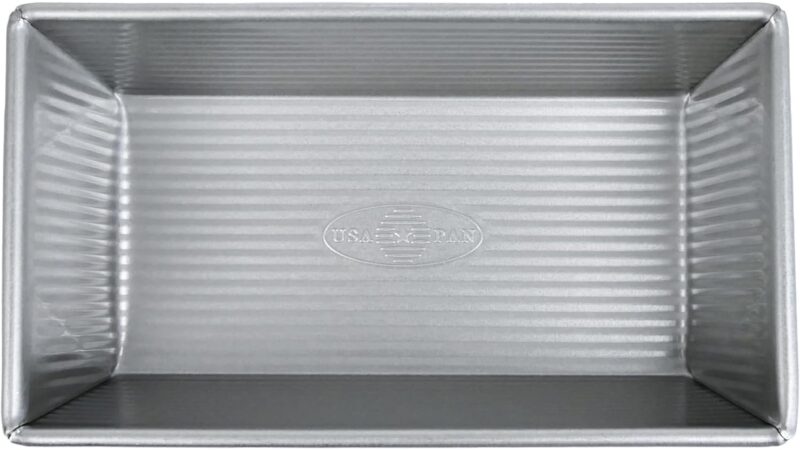
The tin matters more than people think. Thin, flimsy ones heat unevenly, so the edges go dark while the middle’s still damp, and cheap non-stick wears off quickly. The tin worth getting is the USA Pan 1 pound loaf pan. It’s heavy aluminised steel made in the USA, with a ridged base and sides.
Why the ridges are there
Those corrugations aren’t decoration. USA Pan say they stiffen the tin and let air move under the loaf, which helps it bake evenly and come away cleanly. The coating is their own silicone non-stick, which they list as free of PTFE, PFOA and BPA. The corners are folded rather than welded, which is what keeps it from flexing when you lift it out of a hot oven full.
A sizing note for UK recipes
The inside measures 8.5 x 4.5 x 2.75 inches, roughly 21.5 x 11.5 x 7cm. That’s bigger than the old British 1lb tin but a little smaller than the usual 2lb one most banana bread recipes ask for. If your recipe says 2lb, fill it to about three-quarters and bake any leftover batter as a couple of muffins. If you overfill it you get a domed top that spills over the sides and a raw streak through the middle.
Looking after it
- USA Pan’s instructions are hot water, mild soap and a soft sponge or gentle brush. I’d keep it out of the dishwasher.
- Skip metal knives for loosening the sides. A silicone spatula is plenty, and usually you won’t need anything.
- A light grease before the first few bakes doesn’t hurt, even though it’s non-stick.
It works just as well for meatloaf, pound cake, a small sandwich loaf or a crustless quiche. If you only own one loaf tin, I’d make it a solid one like this rather than a cheap one you’ll replace in a year.