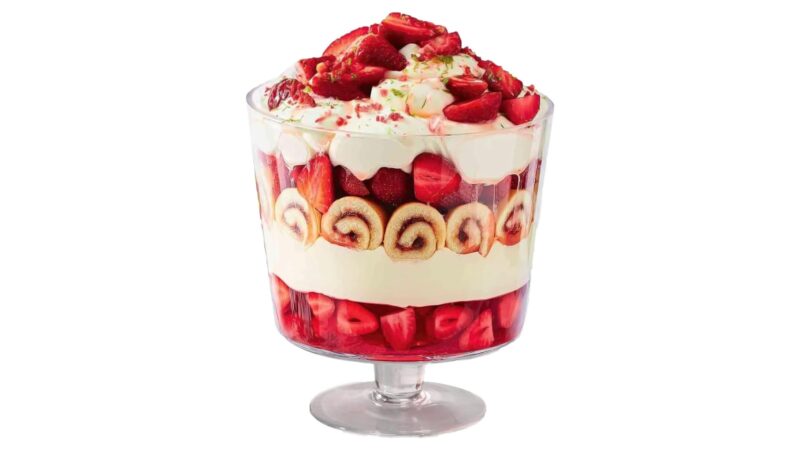
For a family Christmas, 3 litres. Most people buy smaller the first time. You picture neat layers of sponge, fruit, custard and cream, each a couple of centimetres thick. Then you actually build it and realise four proper layers need real height, and the sponge has to go in thick or the jelly drowns it. A small bowl means either thin, sad layers or cream piled above the rim and sliding off by the time you’ve carried it to the table.
Bowl size versus people
As a loose guide, a 2 litre bowl does about six to eight people. That’s fine for a normal Sunday, but it’s tight on Christmas Day once someone’s asked for seconds. A 3 litre bowl feeds a big family table, roughly ten to twelve servings, and that’s the size most traditional recipes are written for. Anything bigger starts to get awkward to carry and won’t fit on a fridge shelf. And if it’s only ever two or three of you, skip the big bowl and build individual trifles in wine glasses.
That last part is worth stressing. A trifle has to set in the fridge for hours, and usually overnight. Before you buy, check the height of your tallest fridge shelf with the shelf above it in place, then subtract a couple of centimetres for the cream on top. Footed bowls in particular are taller than they look.
Maison & White’s 3 litre bowl
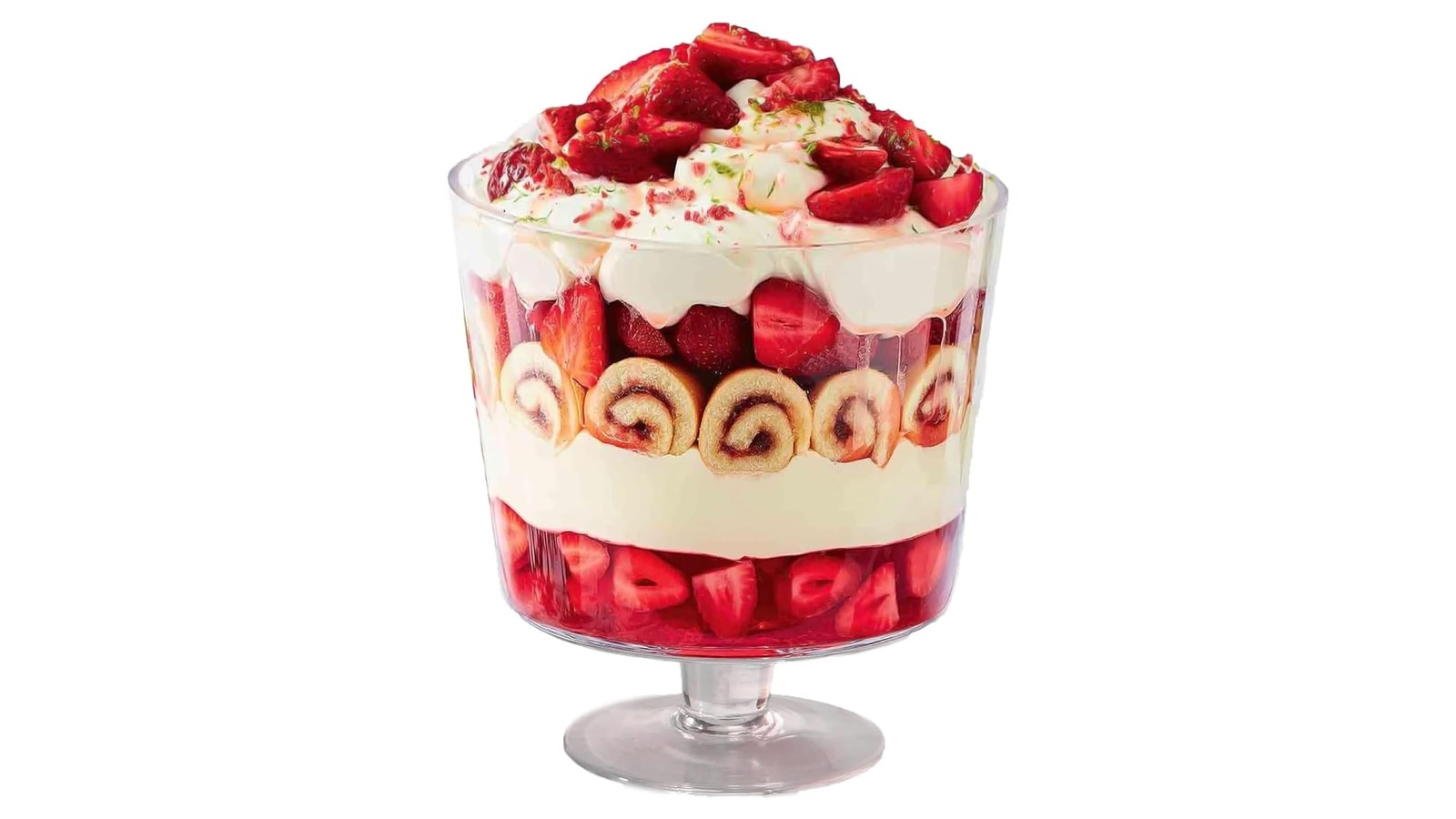
The Maison & White 3L footed trifle bowl is a straightforward clear glass bowl on a short pedestal. It’s 3 litres, which is the sweet spot above, and it weighs 1.36kg empty. That makes it sturdy enough not to feel flimsy, but fine to lift with a full load. The foot raises it up a bit so the layers are at eye level on the table, which is half the point of a trifle.
The listing says it’s dishwasher safe, though if it’s being used once or twice a year I’d still wash it by hand to keep the glass from clouding. It comes with a 2-year manufacturer’s warranty. It’s also plain enough to use as a fruit bowl or a salad bowl the rest of the year, which helps justify the cupboard space.
Getting clean layers
- Press the sponge against the glass. If you’re using slices of Swiss roll, stand them against the sides so the spirals show through. A homemade one is easy if you’ve got the right tin, and the yule log tin doubles up for this.
- Let each layer set before the next. Jelly needs to be firm before custard goes on, or the two bleed into each other and you lose the clean lines.
- Cool the custard first. Warm custard on top of jelly melts it. Let it cool to lukewarm with cling film touching the surface so it doesn’t form a skin.
- Cream goes on last, on the day. Whipped cream weeps if it sits overnight, so add it a few hours before serving at most.