Get a decent food flask, and preheat it with boiling water before the soup goes in. That second part is what most people skip, and it’s usually why their soup is lukewarm by half twelve.
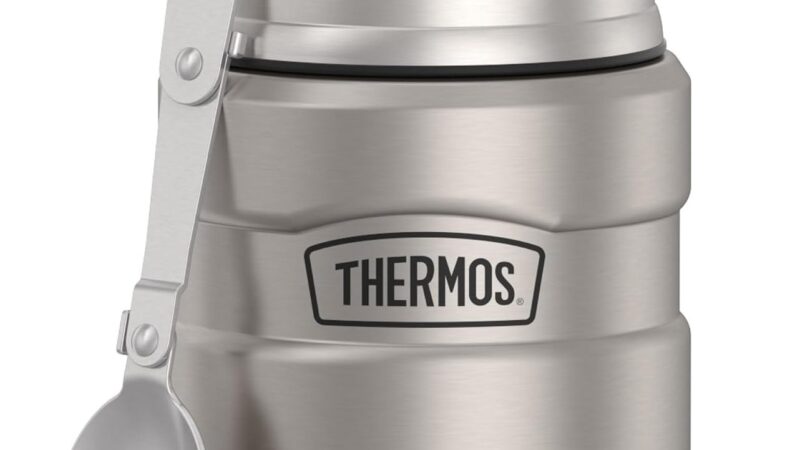
The flask I’d buy is the Thermos Stainless King food jar in the 16oz size. That’s around 470ml, a proper single portion of soup, stew, chilli or porridge, and small enough to sit in a work bag next to a laptop.
What it’s got going for it
- Thermos rate it to keep food hot for up to 9 hours and cold for up to 14. A soup made at 7am should still be steaming at lunch.
- 18/8 stainless steel, and the outside stays cool to the touch, so you’re not juggling a hot tin on the bus.
- A folding stainless steel spoon clips onto the side. Handy if the office kitchen only runs to plastic forks.
- The lid is leakproof when closed and has a small pressure-release stopper. Hot food builds pressure in a sealed flask, and without a way to let it out you can get a spurt in the face when you unscrew it.
- It comes apart for cleaning and can go in the dishwasher, top rack recommended.
It comes in a handful of colours. I’d pick the plain matte steel, since it hides scuffs after a winter rattling around in a rucksack.
Getting the most heat out of it
Fill the flask with boiling water from the kettle, put the lid on, and leave it for five to ten minutes while the soup heats. A flask that’s been in a cold cupboard overnight will pull the heat straight out of whatever you pour in, so this matters more than the flask itself.
Then tip the water out and pour the soup in straight away, bubbling hot rather than merely warm. Fill it close to the top, as less air in there means less space for heat to escape. And try not to open it for a sniff at eleven o’clock. Every peek costs you.
In summer it works the other way round for pasta salad or overnight oats. Chill it with cold water first.