Everyone’s done it. You’re halfway through a batch of mince pies, the cutter’s gone missing, and you grab a wine glass or a mug. And it sort of works.
The trouble is how it works. A glass has a thick, rounded rim, so it doesn’t really cut the dough. It presses down and pinches the edge together. For pastry lids that’s mostly a cosmetic problem: you get rougher edges, and sometimes the dough sticks inside the glass and tears as you pull it out.
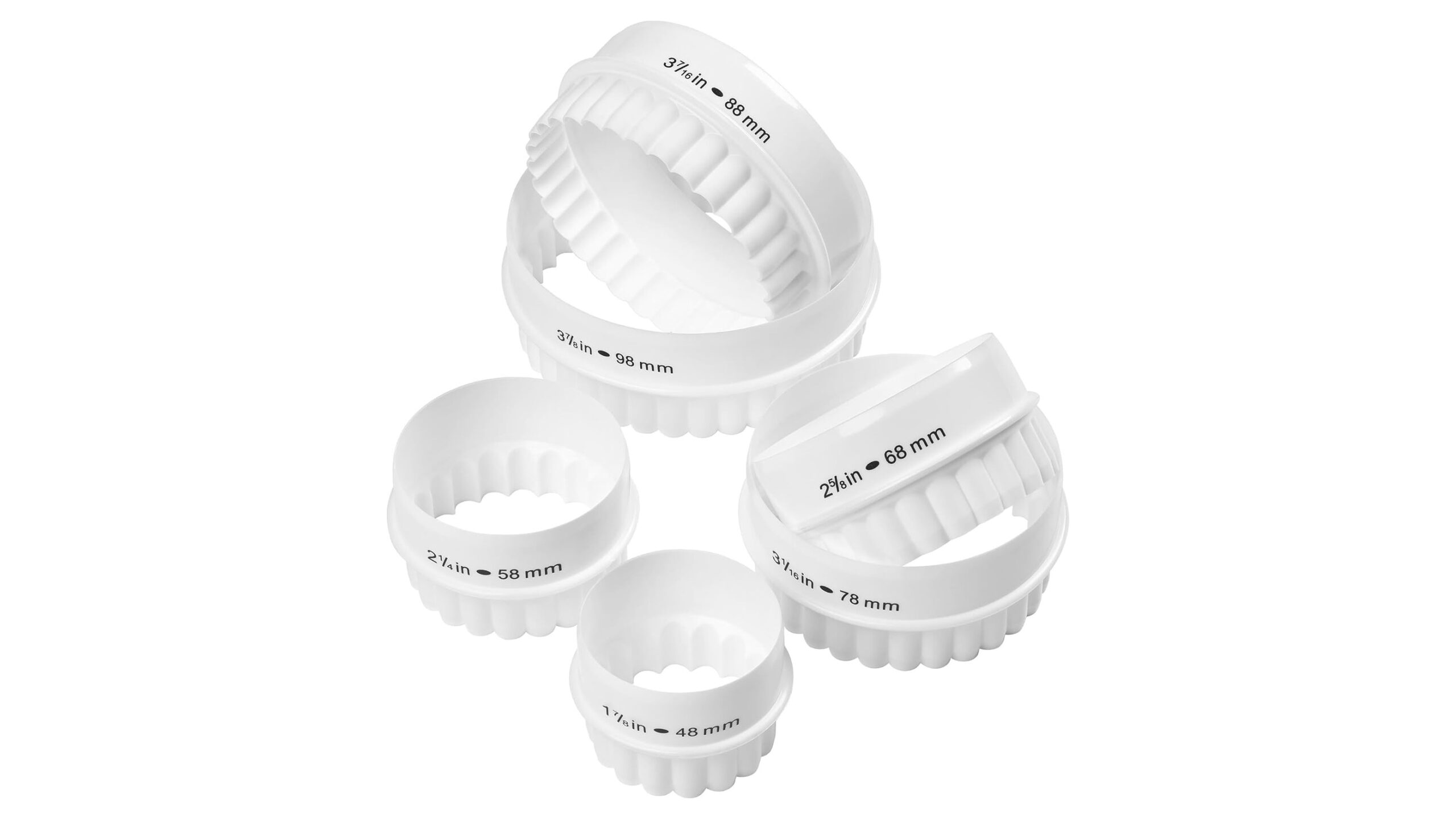
Six cutters, twelve edges
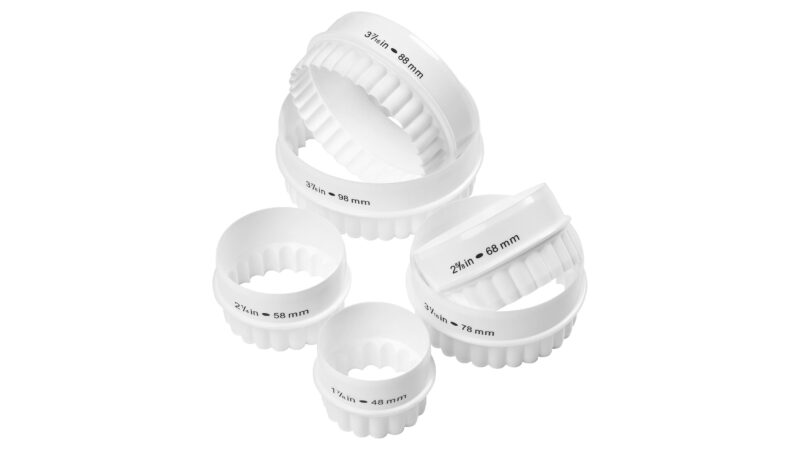
The Tala reversible pastry cutters are a set of six round cutters going from 48mm up to 98mm, in steps of 10mm. Each one has a fluted edge on one side and a plain edge on the other, so you get twelve options from six pieces, and they nest inside each other in one stack in the drawer.
For mince pies you need two sizes that go together: a bigger circle to line each hole in the tin and a smaller one for the lid. Exactly which two depends on your tin, and with six to choose from you’ll find a pair that fits. If you’re still deciding on the tin itself, there’s a separate post on the best tin for mince pies.
They’re plastic rather than metal. That means they’re not as razor-sharp as a steel cutter, but they won’t rust, they don’t dent if you drop them, and they’re dishwasher safe and BPA free. The size is printed on the side of each one, which saves holding them up against a ruler. Tala has been making baking kit since 1899.
Scones are where a glass really fails
A scone rises because the edges are open, so the layers can lift. Squash the edges shut with a blunt rim and they bake lopsided, or they barely rise at one side at all. That’s also why every scone recipe tells you to press the cutter straight down and lift it straight up without twisting it. A thin, sharp edge cuts clean and leaves the sides free to rise.
So if you only make mince pies, a glass will get you by. If you make scones, get proper cutters.
Getting clean cuts
- Dip the cutter in flour between cuts so the dough doesn’t stick inside it.
- Roll the dough to an even thickness first. If one end of the sheet is thicker than the other, your lids won’t match. There’s a post on rolling to an even thickness if that’s a regular battle.
- Cut the shapes as close together as you can, so there’s less dough to re-roll. Re-rolled pastry gets tougher each time.
- For scones, straight down, straight up, no twisting.