You don’t need a boxy machine with a built-in grinder and a milk wand to make something close to real espresso at home. Italians have been doing it on the stovetop for close to a century with a moka pot, a simple two-chamber design that uses steam pressure to push hot water through finely ground coffee. It’s not technically espresso in the strict pressure-brewed sense, but it’s dark, strong, and concentrated enough that most people can’t tell the difference by taste alone.
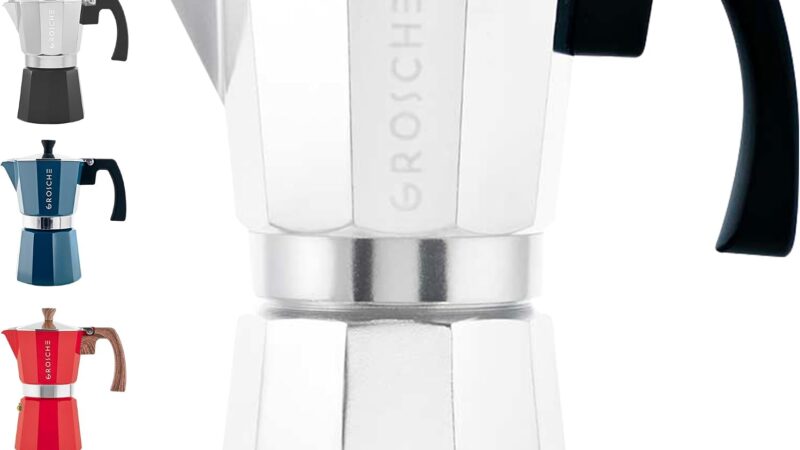
The GROSCHE Milano Moka Pot is a solid entry point if you’ve never used one. It comes in a few sizes, from 3 espresso cups up to 12, and the 6-cup version holds about 9.3 ounces, which is enough for two decent-sized coffees or a handful of proper espresso shots. It’s built for gas and electric stovetops. Like most aluminum moka pots, it isn’t rated for induction on its own, so if that’s your cooktop you’d need a separate induction adapter plate underneath it.
The design details that actually help
A few things set it apart from the flimsier versions you’ll find elsewhere. It has an enlarged soft-touch handle that stays cool, a burn guard around the base, and what GROSCHE calls an Italian safety valve, which is the small pressure-release valve that keeps things from getting dangerous if the grounds are packed too tight. There’s also a permanent filter, so you’re not buying paper filters or worrying about running out.
One thing to know going in: it’s hand wash only. A few reviewers learned this the hard way after running it through a dishwasher and finding it had tarnished. It’s a small trade-off for something that, cared for properly, should last years rather than the single season some electric machines manage.
What people actually say about using it
It holds a 4.4-star rating across more than 25,000 reviews, which is a genuinely large sample size for a kitchen gadget, and it currently carries Amazon’s Choice for stovetop espresso makers. The recurring praise is about the coffee itself, rich and strong rather than watery, with several long-time owners saying theirs has lasted multiple years of daily use. A few mention a learning curve at first, mostly around not overheating it and not packing the coffee grounds too tightly, both of which are easy fixes once you’ve made a batch or two.
If your mornings currently involve a drip machine that produces something fine but forgettable, this is a low-commitment way to find out whether you actually prefer stronger coffee, without committing to a full espresso setup. It’s small enough to store in a cabinet when you’re not using it, and it doubles as a decent camping coffee maker if that’s ever relevant to you.