Rinsing rice washes off loose surface starch, and that starch is a big part of why rice cooks up gummy and clumped together. It matters most for fluffy long-grain rice. Skip it for risotto or rice pudding, where you want that starch.
The trouble is the obvious way of doing it: tip it into a sieve, run the tap, and watch a few hundred grains escape through the mesh or bounce out into the sink. Basmati and jasmine are the worst for this, being long and slim. A sieve also drains so fast that you can’t really tell when the water is running clear, which is the only way to know you’re done.
The OXO washing colander
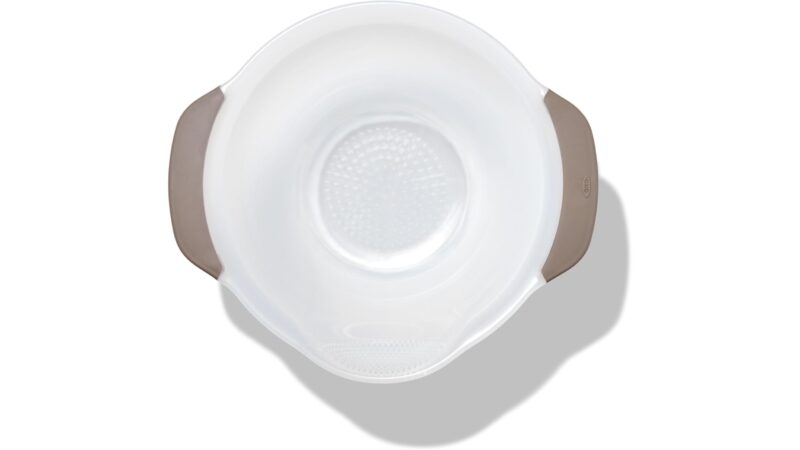
The OXO Good Grips Rice & Grains Washing Colander is a deep white bowl with small square holes in the base, sized to hold grains back. The holes let water out slowly on purpose, so it pools in the bowl first. That pooling is the useful bit, because you can actually see whether it’s cloudy or clear before it drains away.
There’s a pour spout with its own extra drain holes for getting the last of the water off, and two non-slip handles so you can swirl and shake it without it slipping out of wet hands. OXO says it works for quinoa, buckwheat and barley too, and for washing berries. It’s dishwasher safe.
How I’d use it
- Measure the rice straight into the colander.
- Fill it with cold water from the tap and swish the grains around with your fingers for a few seconds.
- Let it drain, then repeat. Three or four goes is usually enough for basmati, when the pooled water looks close to clear.
- Tip the bowl towards the spout to shed the last of the water, then into the pan.
Since you’ve rinsed it, the rice is carrying a little extra water, so you may want to cut back slightly on the cooking water if it comes out softer than you like.
If you only make rice once a month, a sieve and a bit of patience will do. If it’s on the table most weeks, OXO’s rice and grains colander earns its cupboard space. It averages 4.8 stars from about 6,500 Amazon ratings at the time of writing.