Mostly, yes. It won’t save a tart on its own, but it makes the bottom noticeably crisper than a solid tin does, and it’s the simplest fix for pale pastry I know of.
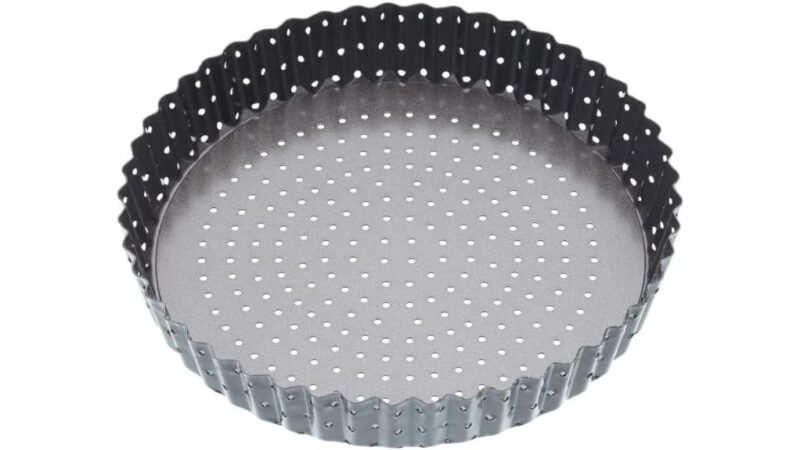
The best-known example on Amazon UK is the MasterClass Crusty Bake perforated tart tin, a 23cm fluted tin with a loose base. Both the sides and the base are covered in small holes, which is the whole point.
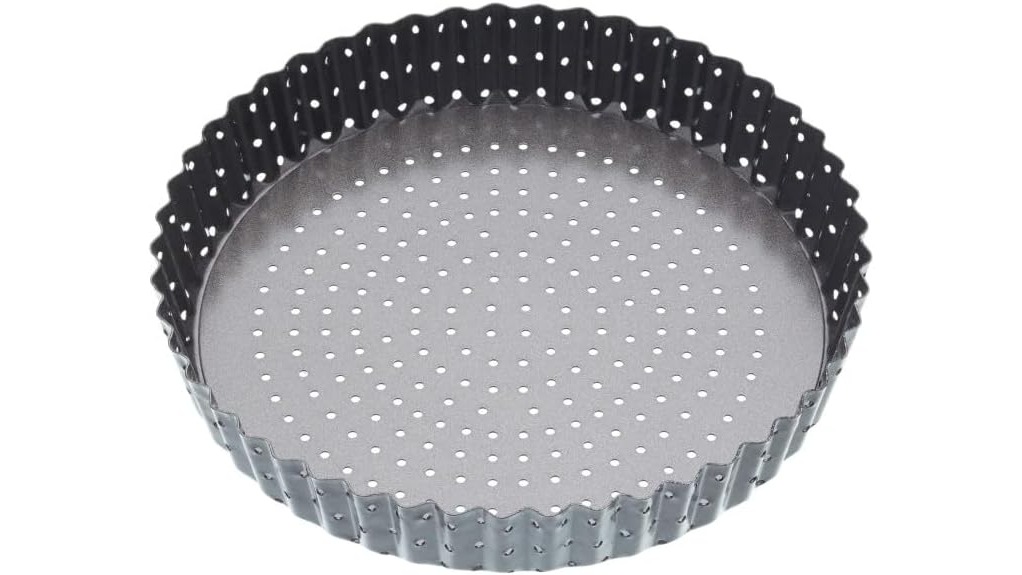
Why holes help
A soggy bottom is pastry that never got hot enough, fast enough. With a solid tin, the metal has to warm up before the pastry does, and any moisture from the filling has nowhere to go. Holes let the oven’s heat reach the pastry directly and let steam escape. MasterClass’s own wording is that heat circulates for crisper pastry and evenly cooked fillings, and that matches what you’d expect from how pastry bakes.
As for the tin itself:
- It’s 1mm carbon steel, so it shouldn’t warp in a hot oven, and the finish is electroplated against rust.
- It has a double layer of Quantum II non-stick, so tarts should slide off the base without a fight.
- The base pushes up and out, which is the only sane way to get a fluted tart out in one piece.
- It’s dishwasher safe and comes with a 20-year guarantee on the tin, 5 years on the non-stick.
Things the holes don’t fix
You still need to blind bake wet fillings. For a quiche, a custard tart or a lemon tart, bake the case first. A perforated tin makes blind baking work better, but it doesn’t replace it. If your pastry keeps shrinking down the sides while you do that, we’ve covered why pastry shrinks when you blind bake it.
Cracks will leak. If the pastry case has a split and you pour in a runny filling, it’ll find the holes and drip onto your oven floor. Patch any cracks with a scrap of raw pastry before the filling goes in.
Pastry can stick in the holes if you roll it very thin and press hard. Lift the pastry into the tin and ease it into the corners rather than squashing it.
Which Christmas bakes it’s good for
If you’re making a frangipane mince tart, a Bakewell, or a big quiche for Boxing Day, I’d say yes. Those are exactly the bakes where a damp base ruins it. For mince pies, you want a proper mince pie tin instead.
If you already own a decent solid tart tin and your bottoms come out fine, don’t bother. But if you’ve read every tip in our soggy bottom guide and you’re still getting pale pastry, the tin is probably the problem.