You can make fudge without a thermometer. Your gran probably did. You drop a little of the boiling syrup into a glass of cold water, fish it out, and see what it does. If it squashes into a soft ball between your fingers, it’s ready.
The cold water test works. The trouble is that it’s easy to read wrong, especially the first few times, and fudge is unforgiving. A couple of degrees too low and it never sets, so you end up with a tin of caramel sauce. A couple too high and it turns hard and grainy. A sugar thermometer doesn’t make you a better cook. It just tells you the number, so you can stop guessing.
The temperatures that matter at Christmas
If you’re making sweets for presents this year, these are the ones to know:
- Fudge: soft ball, roughly 112 to 116°C. Most recipes aim for about 115°C.
- Jam and marmalade: setting point is around 104 to 105°C.
- Butter toffee and brittle: hard crack, about 149 to 154°C.
Fudge has the narrowest window of the three, and it’s also where a thermometer helps most. Once the syrup gets past about 110°C the temperature climbs quickly, and with the cold water test you’re always a step behind it.
The one I’d get
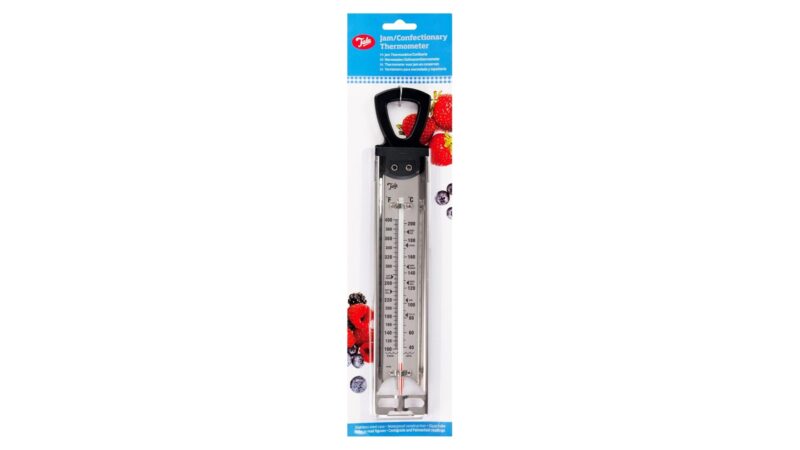
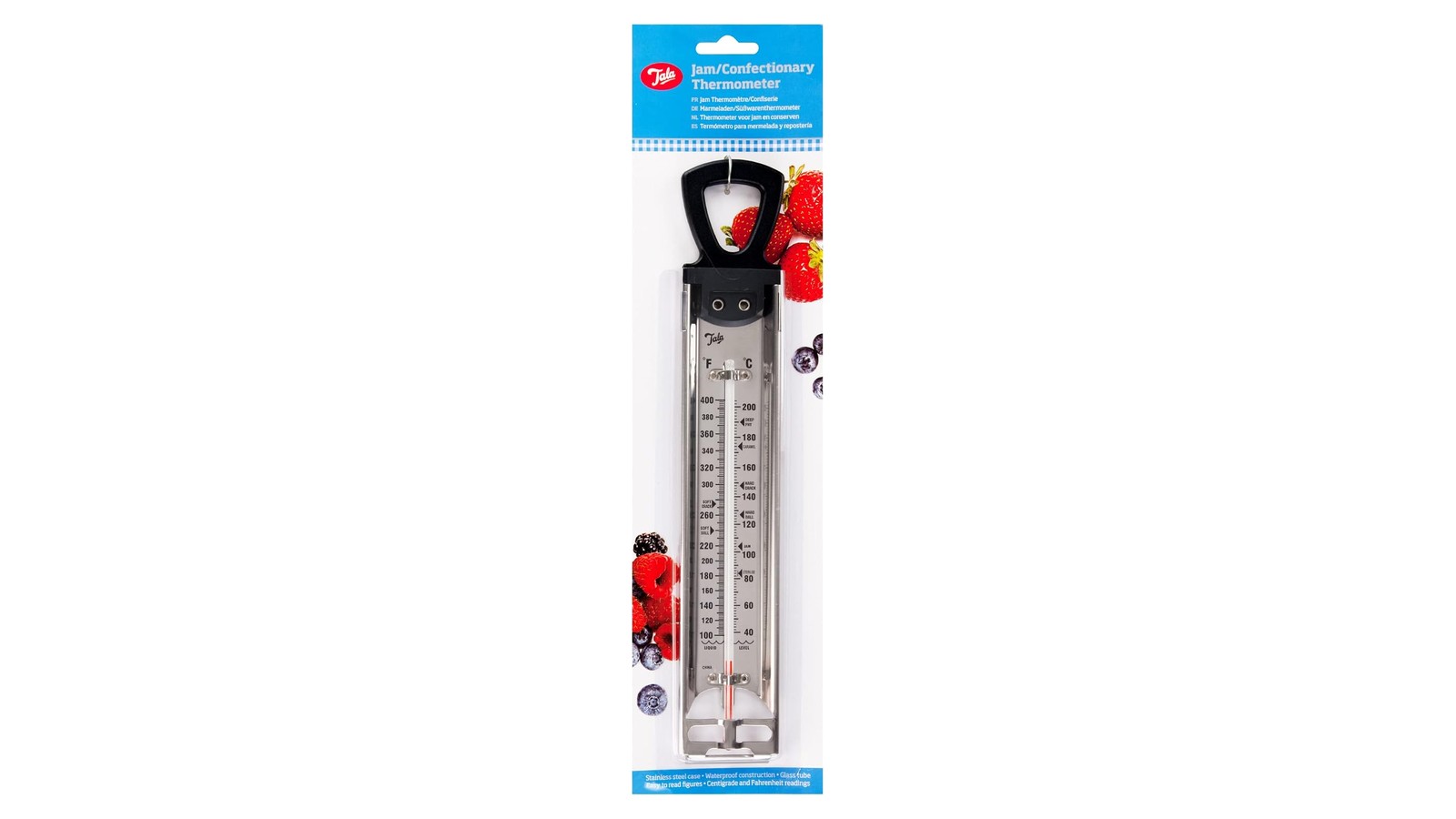
There are digital probes that will do this job, but for sugar work I’d go old-fashioned. The Tala jam thermometer is a glass thermometer in a stainless steel case that you leave standing in the pan, so you can read it at a glance while you stir rather than holding a probe in a pan of very hot sugar.
It reads from 40 to 200°C, with Fahrenheit alongside, which covers everything from jam to hard crack with room to spare. The figures are big and clear, which matters when the pan is steaming and you’ve got a wooden spoon in the other hand. It’s mercury free, there’s a plastic handle at the top, and it’s long enough that your hand stays well clear of the steam.
If you also want something for deep frying, there’s a separate post on a thermometer for deep frying and sugar work with a pan clip and a dial.
Three things that catch people out
Check it before you start. Stand it in a pan of boiling water: it should read about 100°C. If it’s a degree or two off, just adjust your target by the same amount.
Keep the bulb in the syrup but off the bottom of the pan. The base of the pan is hotter than the sugar, so a thermometer touching it will read high and you’ll take the fudge off too early.
Use a bigger pan than you think. Fudge mixture foams up a lot when it boils, and you need enough depth to cover the bulb without the whole lot climbing over the edge.