You pull a tray of sausage rolls out of the oven and one of them has a brush bristle baked into the glaze. It happens more often than it should. Natural bristle pastry brushes shed. They also never seem to dry out properly inside the ferrule, so after a few months they start to smell of old butter, and a brush that’s been in raw egg wash is not something you want sitting there damp.
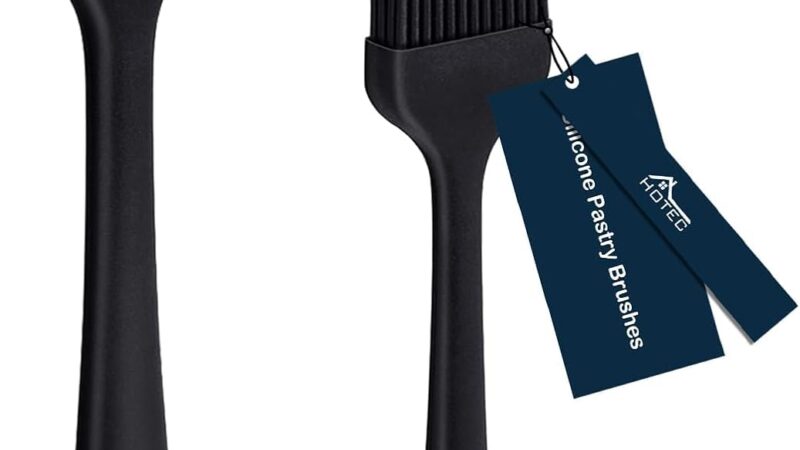
A silicone brush gets rid of all of that. The bristles and the head are one moulded piece, so nothing can work loose and end up in your food. There’s nowhere for grease to hide, so it goes in the dishwasher and comes out properly clean.
The set I’d get is HOTEC’s pair. You get a large brush about 10 inches long and a smaller one around 8 inches. The big one is for basting a roast or a rack of ribs on the barbecue. The small one is for egg wash and glazes, where you want a bit more control. Each head has four rows of bristles, and there’s a stainless steel core running through the handle so they don’t flop when you drag them through thick barbecue sauce.
They’re rated from well below freezing to 315°C, which covers leaving one resting on the edge of a hot roasting tin or using it over a grill. The silicone is BPA free.
Where silicone falls short
Silicone doesn’t soak up liquid the way natural bristles do. It holds some in the gaps between the bristles, but a thin egg wash will run off more easily, so you’ll dip more often and use lighter strokes. On really delicate stuff, like a sheet of filo, a soft natural brush still gives a slightly finer, more even coat. I think that’s a fair trade for never picking a bristle out of a pie again. If you do a lot of filo, maybe keep your old brush just for that.
For buttering cake tins, glazing bread and basting meat, silicone is simply easier to live with.
HOTEC silicone basting and pastry brushes, pair of two (Amazon)