The oven does a perfectly decent job. Score the chestnuts, put them on a tray at about 200°C and give them 20 to 30 minutes. They come out soft, sweet and easy to peel, and you didn’t have to buy anything.
What the oven won’t give you is that charred, slightly smoky taste you get from the stalls in town at this time of year. That comes from direct heat, and that’s what a chestnut pan is for. If you’ve got a gas hob, a fire pit or a barbecue you light in winter, it’s worth having. If you’re electric-only and eat chestnuts once at Christmas, it isn’t.
Why the pan has holes in it
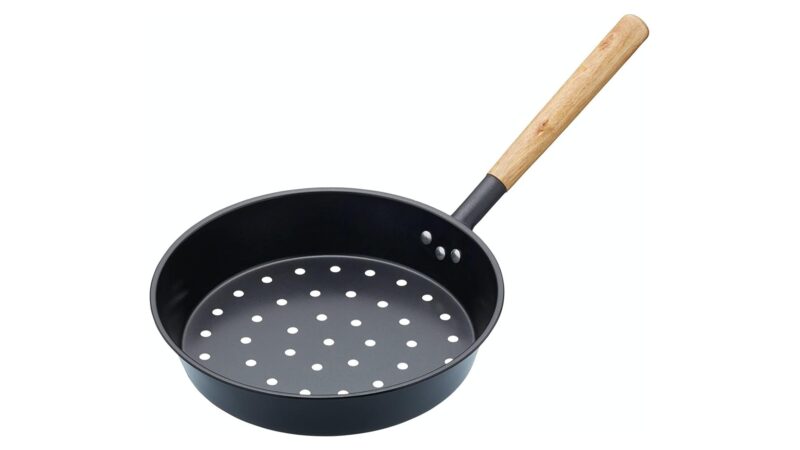
A chestnut pan looks like a frying pan that’s been used for target practice. The holes are the whole point. They let flame or heat hit the shells directly, so they blacken in spots and pick up that toasty flavour, and they let steam escape so the chestnuts roast rather than stew in their own moisture.
You’ll still need to cut a cross in each one first, or they can burst. If your knife keeps slipping off the shells, I wrote about scoring chestnuts safely a while back.
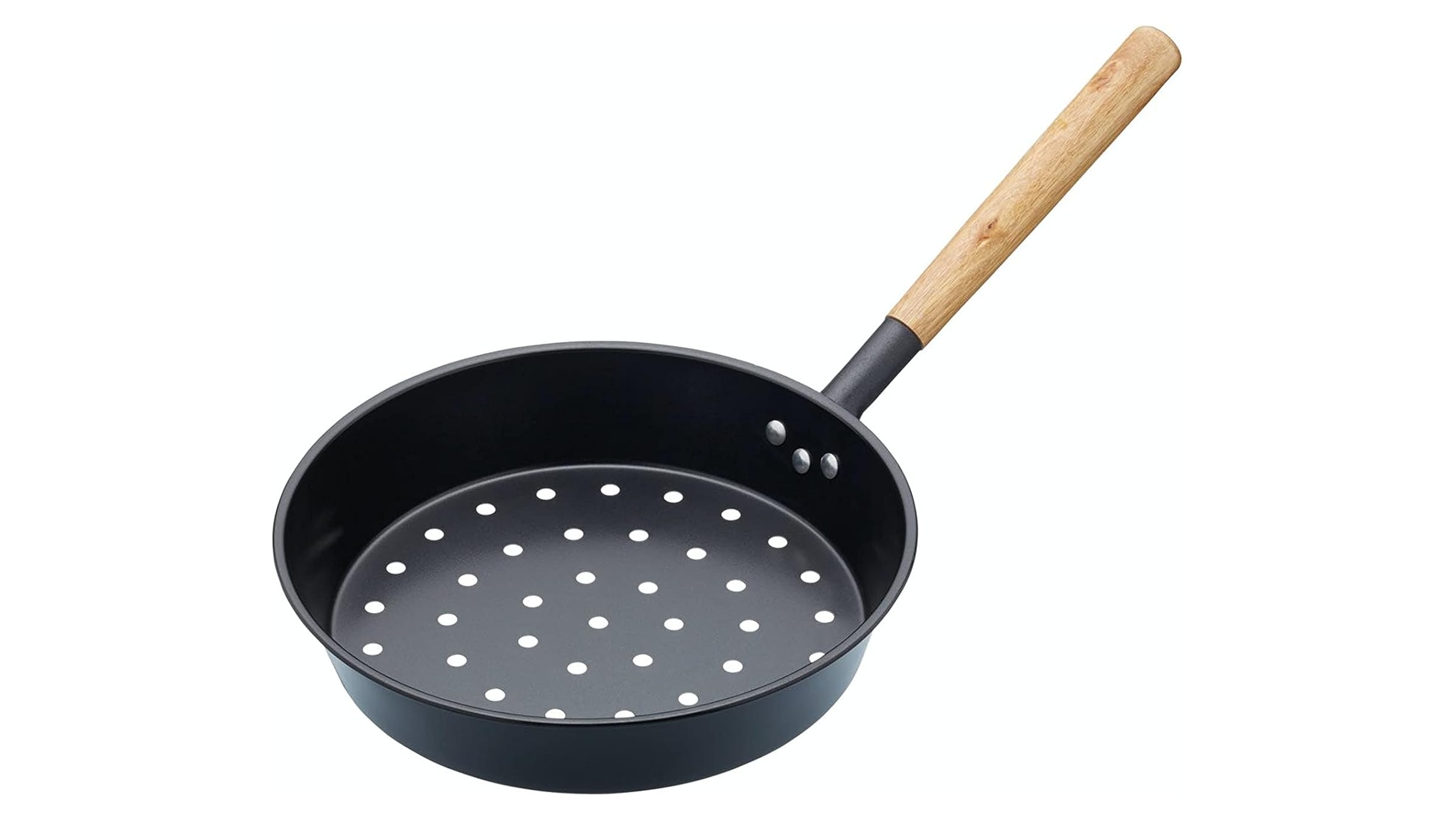
The KitchenCraft carbon steel chestnut roasting pan is about as straightforward as kitchen kit gets. It’s a 27cm carbon steel pan with holes punched across the base and a long wooden handle, roughly 51cm end to end, so your hand stays well away from the heat while you shake it.
KitchenCraft says it works on gas, electric and ceramic hobs, and on the barbecue. Gas is where it’s at its best, because the flame comes up through the holes. It’s light too, under half a kilo, which matters when you’re tossing a pan of chestnuts every minute or so.
It isn’t dishwasher safe, and it’s bare carbon steel, so it needs drying properly after use or it’ll go rusty. KitchenCraft doesn’t list induction among the hobs it’s meant for, so if that’s all you have, check before you buy or stick to the oven.
How to use it
- Score the chestnuts and soak them in water for 10 minutes or so. It helps the insides steam while the outside chars.
- Spread them in a single layer, cut side up, and put the pan over a medium heat.
- Shake the pan every minute or two. They’re usually done in 15 to 20 minutes, when the shells have split back along the cross and the nut inside gives a little when you squeeze it.
- Tip them into a tea towel, wrap them up for five minutes, then peel while they’re still warm.
Out of chestnut season, it’s handy for peppers and veg on the barbecue too, so it doesn’t just sit in the cupboard for eleven months.