
Yes. You just need to accept that a baked doughnut isn’t quite the same thing as a fried one. A fried doughnut is a yeasted dough that puffs up and crisps in hot oil. A baked doughnut is closer to a muffin batter cooked in a ring-shaped tin. It’s softer and more cakey, and honestly, once it’s been dipped in a glaze or rolled in cinnamon sugar, most people at a kitchen table won’t complain.
The big win is that there’s no deep fat pan. No litre of oil to heat, no spitting, no smell through the house for the rest of the day, and no worrying about the kids being near the hob. On a dark winter afternoon that turns doughnuts from a project into something you can do on a whim.
You do need the tin
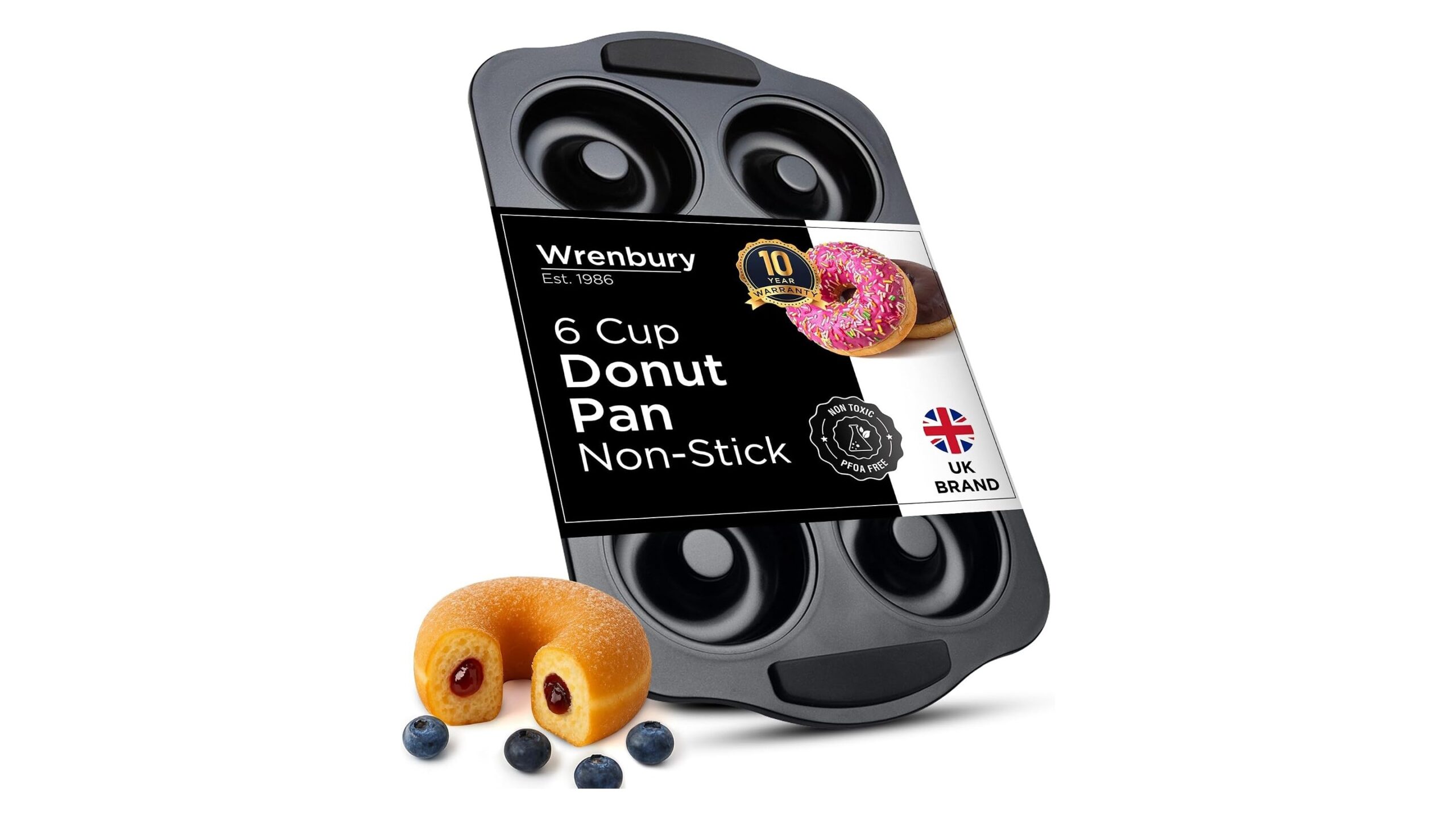
You can’t really fake the ring shape. People try with a muffin tin and a ball of foil in the middle, and it’s a faff. A proper doughnut tin has a raised post in the centre of each cup, so the batter bakes evenly all the way round instead of staying raw in the middle.
The Wrenbury 6-cup doughnut tin is a solid one. It’s carbon steel, so it’s rigid and heats evenly, which flimsy silicone moulds don’t always manage. The listing says the non-stick coating is ceramic and the tin is dishwasher safe. Each cup is about 3.5 inches across, which makes a doughnut you’d recognise, not a mini one.
The listing also says it’ll work for bagels. I’d stick to doughnuts and maybe ring-shaped savoury bakes like cheese and herb rolls.
Getting them right
- Pipe, don’t spoon. Put the batter in a piping bag, or a freezer bag with the corner snipped off, and pipe a ring round each cup. Spooning it in gets messy and you’ll cover the centre post.
- Only fill each cup about two-thirds. Overfill and the batter rises over the post and you lose the hole.
- Grease it anyway. Even with a good coating, a thin brush of melted butter on the first few bakes helps them drop out cleanly.
- Bake hot and short. Most recipes want around 180°C for 10 to 12 minutes. They’re done when they spring back under a fingertip, which is the same test you would use on a sponge.
- Let them sit for a few minutes, then turn the tin over onto a rack. Glaze once they’ve cooled a bit, or roll them in sugar while they’re still warm so it sticks.
For a winter weekend bake with kids, this is one of the easiest wins going. Fried doughnuts are better, but these happen in half an hour, not half a day.