Most brownie disasters I’ve seen weren’t really the recipe’s fault. The mix went into the wrong tin. A bigger tin gives you thin, dry, cakey brownies. A smaller one leaves a raw middle with burnt corners. A glass dish holds heat differently again.
So before you blame the recipe, check the tin.
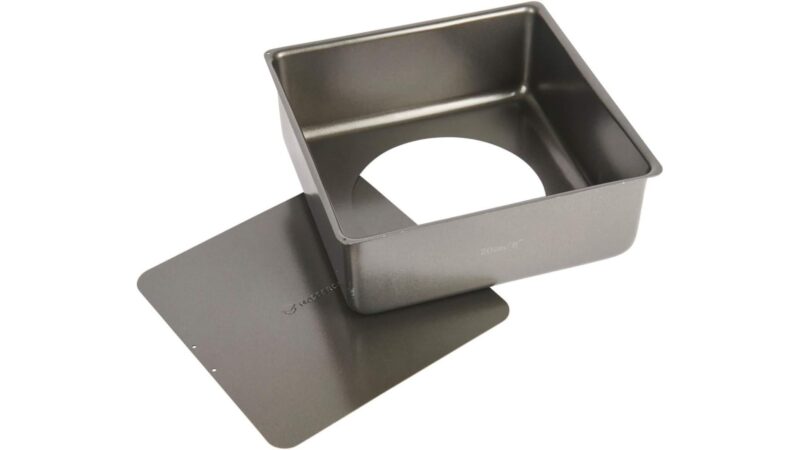
Size: 20cm square is the one to own
A huge number of UK brownie recipes are written for a 20cm (8 inch) square tin. If yours is 23cm, the same mix spreads over roughly a third more area, so it comes out thinner and bakes faster. That’s the most common reason brownies come out dry.
If you only buy one brownie tin, get a 20cm square. It’ll also do flapjacks, millionaire’s shortbread, fudge and most traybakes written for a small tin.
Material: metal, not glass
Metal heats up quickly and gives you the crisp, chewy edges everyone fights over. Glass and ceramic dishes heat more slowly and then hang on to the heat, so the edges tend to overcook before the middle sets. If you do use glass, most bakers drop the oven temperature a little.
Why a loose base is worth having
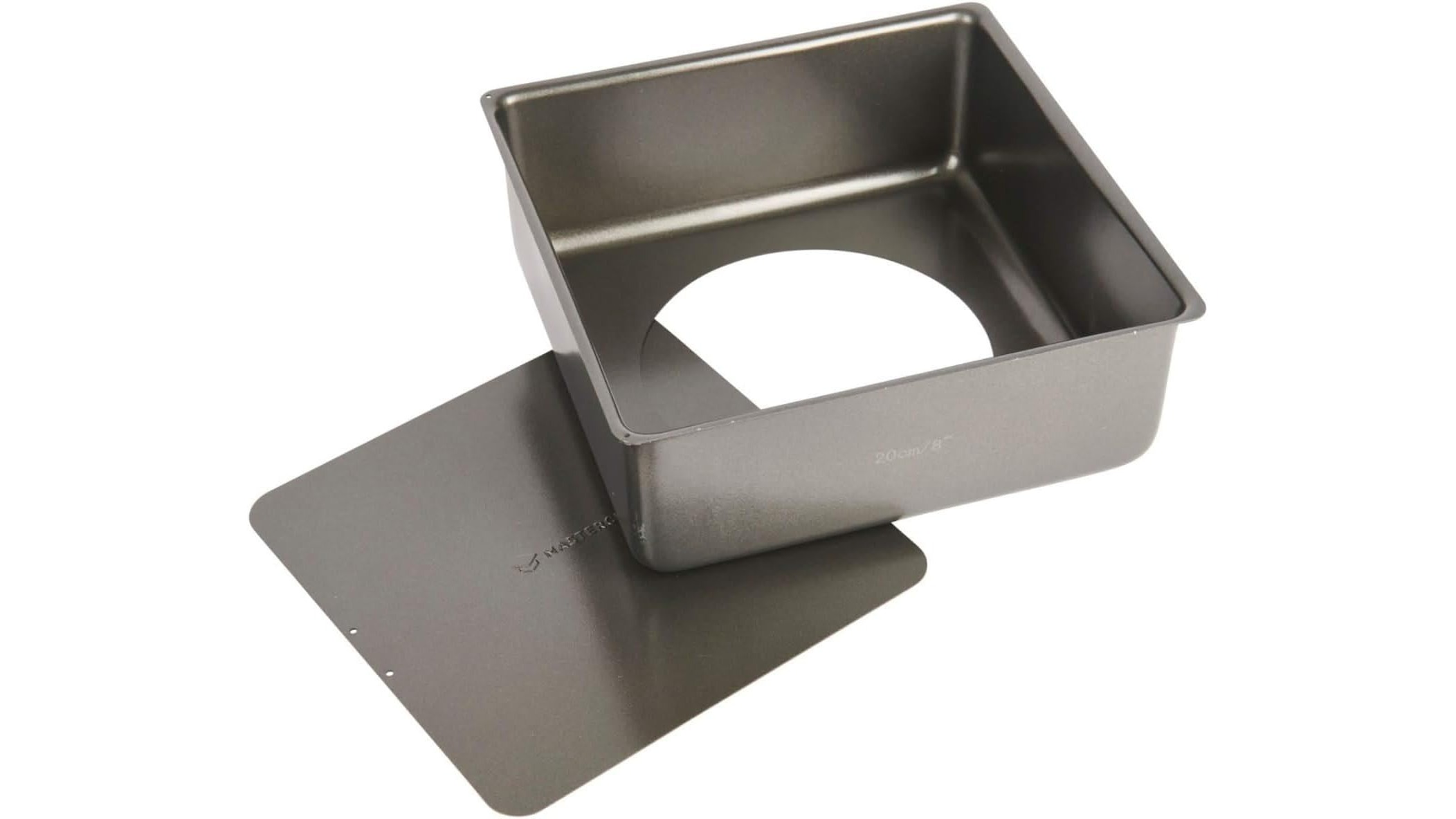
I’d point you at the MasterClass 20cm deep square tin. It’s 1mm carbon steel, which MasterClass says won’t warp, with two layers of non-stick, and it’s deep enough that a standard brownie mix sits well below the rim. The feature that really matters, though, is the base that lifts out.
You let the tray cool, push the base up from underneath, and the whole slab comes out in one piece, ready to cut on a board. There’s no flipping it upside down and no gouging out the first square with a spoon.
The listing’s temperature line is clearly a typo (it says “22°C”), but the Fahrenheit figure next to it works out at 220°C, which is plenty for any brownie or traybake.
A few habits that help whatever tin you use
- Line it anyway. Even with non-stick and a loose base, a sling of baking paper with the ends hanging over the sides makes lifting out easier. It also stops a runny batter seeping round the base.
- Take it out early. A gooey brownie should still have a slight wobble in the middle and a few damp crumbs on a skewer. It keeps cooking in the tin as it cools.
- Cool it completely before cutting. Warm brownies tear. An hour on a cooling rack and then 30 minutes in the fridge gives you clean, sharp squares.
- Check your oven. If one batch is raw and the next is overdone at the same setting, your oven probably runs hot or cold. An oven thermometer will tell you.
One small warning: I’d hand wash it most of the time, even though the listing says it’s dishwasher safe. Non-stick coatings always last longer that way, and dishwasher tablets are hard on them.