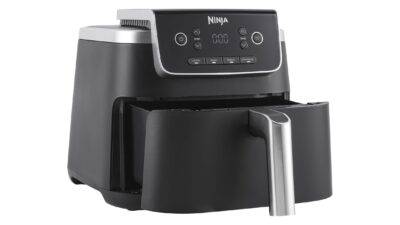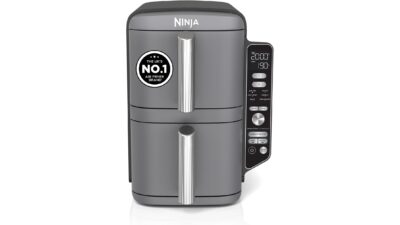
You put some sausages in the air fryer, turn round to butter the toast, and a minute later there’s a grey haze drifting out of the back of the machine and the smoke alarm is thinking about it. It’s one of the most common air fryer complaints, and the good news is that it’s nearly always fixable. The cause is almost always fat, old food or the wrong oil, rather than a fault. Below we go through why air fryers smoke, how to tell harmless smoke from the worrying kind, and what actually stops it. We also take an honest look at a cheap accessory a lot of people buy to deal with the mess, the YQL square silicone air fryer liner, because it helps with some of this and not with the rest.
At a glance
- The short answer: most air fryer smoke is fat. Either fresh fat dripping and spitting from fatty food, or old grease from earlier cooks burning off in the drawer
- The quick fixes: clean under the crisper plate after every fatty cook, use less oil (and one that copes with heat), drop the temperature for fatty food, and pour off fat halfway through
- When to worry: thick black smoke or a hot electrical smell. Switch off at the wall, leave the drawer shut and don’t use it again until the manufacturer has had a look
- The product: YQL Silicone Air Fryer Liners, a 2-pack of square, reusable silicone trays for single-basket air fryers of roughly 3.5L to 5.5L
- Does a liner stop smoke? Partly. It stops grease building up in the drawer, which is a big cause. It does nothing about fat spitting up at the heating element
- Owner rating: 4.3 out of 5 from over 2,000 ratings on Amazon UK at the time of writing
Why your air fryer is smoking
An air fryer is a small box with a very hot element a few centimetres above your food and a fan blasting air around it. That’s brilliant for crisping, and it also means anything greasy gets moved around fast. These are the usual culprits, roughly in order of how often they’re to blame.
1. Fat from the food you’re cooking
Bacon, sausages, burgers, chicken wings with the skin on, lamb chops. All of these render out a lot of fat. It drips through the crisper plate into the drawer, where it gets very hot, and some of it spits back up. The fan then catches tiny droplets and throws them at the element, where they burn. That’s the white-grey smoke most people see, and it tends to start partway through the cook once the fat has really started running.
2. Old grease and crumbs from last time
This is the sneaky one. If you give the crisper plate a quick rinse but never lift it out, a layer of fat builds up underneath. Next time you cook anything, even plain chips, that old layer heats up and smokes. If your air fryer smokes no matter what you put in it, this is the first thing to check.
3. Too much oil, or the wrong oil
Air fryers need very little oil. A teaspoon or a light brush is plenty for most things. Pour on more and the excess drips off and burns. Oils with a low smoke point, like extra virgin olive oil or butter, also start smoking sooner at high air fryer temperatures. Rapeseed, sunflower or groundnut oil cope with the heat better. And skip aerosol cooking sprays: several air fryer makers warn against them because they can leave a sticky residue that damages non-stick coatings, which then burns and smokes on later cooks.
4. Something touching or flying into the element
Overfill the drawer and food on top can end up very close to the element and scorch. Light things are a problem too. A loose paper liner, a bit of foil, cheese that bubbles up or breadcrumbs from a coating can get blown upwards by the fan and burn. Never run an air fryer with an empty paper liner in it, as there’s nothing to weigh it down.
5. It’s brand new
A lot of new air fryers give off a little smoke and a chemical smell for the first few uses as manufacturing residue burns off. Most manuals tell you to run it empty for a few minutes before cooking for this reason. If yours smells strongly of plastic rather than just smoking a bit, our piece on why an air fryer smells like plastic goes into that in more detail.
White smoke or black smoke?
Colour tells you a lot. White or pale grey smoke, often with a frying smell, is almost always fat or moisture. It’s annoying and it’ll set off a sensitive alarm, but it’s not usually dangerous, and the fixes below will sort it.
Black or very dark smoke means something is properly burning, whether that’s food stuck on the element or, less often, an electrical problem. Switch it off at the wall and keep the drawer closed while it settles, rather than yanking it open and feeding it air. Once it’s cool, look for food stuck to the element. If there’s a burning plastic or electrical smell, or you see any sparks or flames, stop using it and contact the manufacturer.
How to stop the smoke
- Clean under the plate, every time you cook something fatty. Take the crisper plate out, tip away the fat once it’s cooled, and wash both parts. This one habit sorts out most smoking air fryers on its own. Our guide to cleaning an air fryer basket without scratching it covers how to do it without wrecking the coating
- Check the element now and then. With the machine unplugged and completely cold, look up at the element. If there’s a crust of old fat on it or the guard around it, wipe it gently with a damp cloth. Follow your manual on this, as some models are more delicate than others
- Turn it down for fatty food. Sausages and bacon don’t need the maximum setting. Cooking them a bit lower and a bit longer means less spitting
- Pour off fat halfway. For a big batch of wings or a pack of sausages, carefully drain the drawer halfway through the cook
- Add a splash of water under the plate. A lot of owners put a couple of tablespoons of water in the bottom of the drawer for very fatty food, so the dripping fat lands in water rather than on hot metal. Check your manual first, as not every brand recommends it
- Use less oil. Brush or toss food in a small amount rather than pouring
- Don’t overfill. Stay under the max line, which helps cooking too. Our explainer on what air fryer capacity actually means has more on why
- Weigh down anything light. If you use paper liners, only put them in with food on top
Where a silicone liner fits in
A silicone liner is a flexible tray that sits inside the basket, on top of the crisper plate or in place of it. The idea is that fat and crumbs land in the liner rather than in the drawer, and you lift the liner out and wash it instead of scrubbing the basket. So it goes straight at cause number 2 on the list above: grease building up over time. It’s also a reusable alternative to paper liners, which avoids the fly-up problem.
What it can’t do is stop fat spitting upwards from the top of a sausage towards the element, because that happens above the liner. And it introduces a trade-off of its own, which we’ll get to.
The YQL Silicone Air Fryer Liner, up close
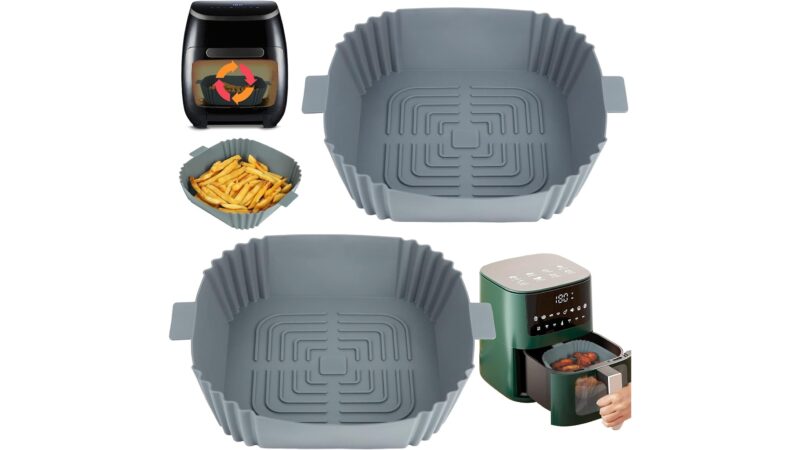
YQL sells a lot of air fryer accessories on Amazon UK, and this square liner is one of its most-rated. You get two in the pack, in grey or black. Each one is 20.5cm across at the top and 16.3cm across the base, and 5cm deep, with a small handle on two sides. The base has raised ridges that are meant to channel grease to the edges so food isn’t sitting flat in it. YQL rates the silicone to 240°C, which is higher than the top setting on most air fryers, and says it’s dishwasher safe.
It’s sold for single-basket air fryers of around 3.5L to 5.5L, and the listing names Cosori, Ninja, Tower, Tefal and Philips among the compatible brands. Owners report it fitting a Cosori and a 3.8L machine without trouble. It also works in an oven or microwave if you want a second use for it.
Pros
- It really does keep the basket clean. Ease of cleaning is the most praised thing in owner reviews by some distance, followed by how clean it keeps the air fryer itself
- Stops the slow build-up of old grease in the drawer, which is a big cause of smoking on later cooks
- Flexible enough to turn inside out for washing, and it can go in the dishwasher
- Reusable, so you’re not burning through packs of paper liners, and it won’t blow up into the element the way loose paper can
- Owners say it doesn’t affect the taste of food and hasn’t melted or warped in normal use. One reviewer who bought a second set said the first lasted well and only got replaced because it had discoloured
- Two in a pack, so you can have one in the wash and one in use
Cons
- Food can end up sitting in its own fat. The ridges are fairly shallow, and more than one owner points out that grease collects around fried food rather than draining away. One reviewer tested battered fish fingers in it and found they didn’t crisp the way they did straight in the basket, which rather defeats the point of an air fryer
- It blocks some airflow underneath the food, so anything you want really crisp all over will usually do better on the bare crisper plate
- It gets scorching hot. The same reviewer needed a tea towel to lift it out after a 12 minute cook. Use oven gloves or tongs, and let it cool before you handle it properly
- Fit is hit and miss. Owner reviews are split on size, and the listing itself isn’t very clear, quoting a few different measurements in different places. Measure the floor of your basket before you buy rather than relying on the litre range
- Some owners find it awkward to get back out of the basket, especially when it’s hot and full of fat
- The fat it collects is still fat. Run it at a very high temperature with a pool of grease in it and you can still get smoke
Who it’s for
It makes most sense if your smoke problem comes from grease building up because you hate cleaning the basket, or because your basket’s non-stick is already a bit tired and you want to protect it. It’s also handy for saucy or messy food that would otherwise bake onto the drawer: marinated chicken, glazed veg, anything with cheese on top, reheating leftovers.
It’s less useful if you mostly cook chips, wedges and coated things where crispness is the whole point. For those, cook straight on the crisper plate and clean it properly afterwards. Plenty of people end up using a liner for some meals and taking it out for others, which is a sensible way to treat it.
If you’re still choosing an air fryer and want one where cleaning is less of a chore in the first place, a smaller, simpler drawer helps. Our Cosori 2L review and Tower Vortx 4.2L review both cover how easy the baskets are to keep clean.
How to use a silicone liner without making smoke worse
- Put the liner in before you preheat only if your manual allows preheating with accessories in. Otherwise put it in with the food
- Don’t use it for very fatty food at maximum temperature. Sausages and bacon are better on the crisper plate with the drawer cleaned afterwards
- Tip away fat from the liner partway through long cooks, carefully, with gloves on
- Leave a gap around the edges if you can, so some air can still get underneath
- Take it out for anything you want crisp, like chips or breaded fish
- Wash it after every use. A greasy liner is just a smaller greasy drawer
Cleaning and safety
Let the liner cool before washing, then either turn it inside out and wash it in warm soapy water or put it in the dishwasher. Over time, silicone can get a slightly tacky film from oil. A soak in hot water with a bit of washing-up liquid usually shifts it. Discolouring is normal and doesn’t mean it’s failed.
Don’t put it directly against the heating element or squash it into a basket that’s too small so the sides fold up near the top. Don’t use sharp metal tools in it. And keep the usual air fryer safety habits: space around the machine, nothing on top of it, and switch off at the wall if you ever see dark smoke.
FAQ
Is it normal for an air fryer to smoke?
A small amount of white smoke when cooking fatty food is common and usually harmless. Constant smoke with every cook, or dark smoke, isn’t normal and usually means old grease, too much oil or something burning on the element.
Why does my air fryer smoke when cooking bacon?
Bacon releases a lot of fat very quickly, and the fan sends it towards the hot element. Cook it a little lower, don’t crowd the basket, and try a splash of water in the bottom of the drawer if your manual allows it. Clean the drawer straight after.
Do silicone liners stop an air fryer smoking?
They help with smoke caused by grease building up in the drawer, because the grease ends up in the liner and gets washed away. They don’t stop fat spitting up from the food itself, and a liner full of hot fat can still smoke.
Are silicone air fryer liners safe?
Food-grade silicone used within its rated temperature is generally considered safe for cooking. The YQL liner is rated to 240°C, above the maximum setting of most air fryers. Check your own air fryer’s top temperature, and don’t let the liner touch the element.
Can I use foil or baking paper instead?
You can, but both need weighing down with food so the fan can’t lift them into the element, and they shouldn’t cover the whole crisper plate or you’ll block the airflow. Some manufacturers advise against foil altogether, so check the manual.
The verdict
If your air fryer smokes, start with the cheap, boring fix: lift out the crisper plate, clean properly underneath, use less oil, and turn the heat down for sausages and bacon. That sorts out most cases without buying anything. A silicone liner is a sensible extra if grease build-up is your real problem and you’d rather wash a floppy tray than scrub a basket. The YQL liner does that job well according to most owners, and the two-pack is good value for what it is. Just go in knowing that fried food won’t crisp quite as well sitting in it, that it gets very hot, and that you should measure your basket before ordering.
You can check the current listing for the YQL Silicone Air Fryer Liners on Amazon UK here: YQL Silicone Air Fryer Liners Square (2-pack).