You’ve probably been told never to wash mushrooms because they’ll soak it all up. It’s one of those kitchen rules that gets repeated everywhere, and it’s mostly a myth.
Food writers have tested it by weighing mushrooms before and after a rinse, and they take on very little water. Mushrooms are already mostly water. A quick rinse isn’t going to ruin them.
That said, there’s still a good case for a brush, and it’s got nothing to do with soggy mushrooms.
The brush
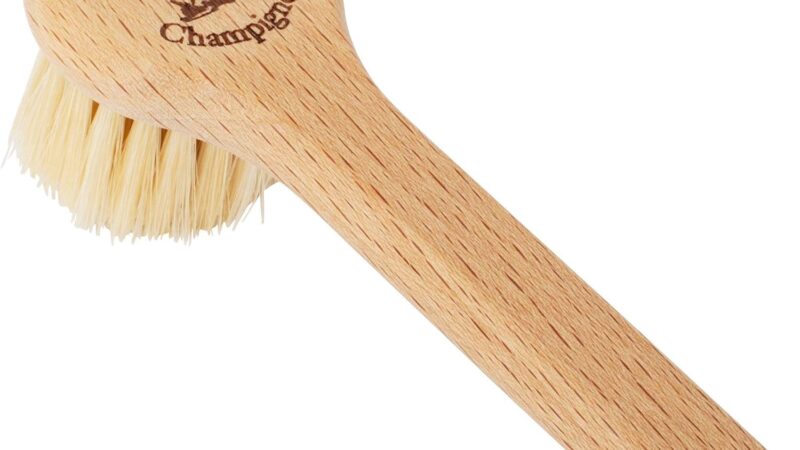
The Redecker Mushroom Brush is small, about 5 inches long, with soft natural pig bristles set into a beechwood handle. Redecker is a German brush maker that’s been going since 1935, and this is a proper bit of kit rather than a novelty. The bristles are soft enough not to scuff the caps, which matters with delicate ones like oyster mushrooms, but firm enough to flick compost out of the gills. You can also use it on new potatoes and other soft veg.
To clean it, rinse it under the tap and leave it to dry bristles down. Don’t leave it soaking, since wood and natural bristle don’t like sitting in water.
So where did the rule come from?
The real problem isn’t absorption, it’s surface water. Wet mushrooms going into a hot pan steam instead of browning. You get grey, rubbery slices sitting in liquid instead of golden ones. If you rinse them and cook them straight away without drying, that’s what happens, and people blamed the wash.
The other thing is that most supermarket chestnut and button mushrooms aren’t very dirty. There’s a bit of compost on the stalks and some specks on the caps. You don’t need running water for that.
When I’d brush and when I’d rinse
Brush them when they’re fairly clean and you want a good sear: frying, a quick stir-fry, mushrooms on toast. Rinse them when they’re properly gritty (wild mushrooms, or a muddy farm-shop bag), then spread them on a tea towel and pat them dry before they go anywhere near the pan. Mushrooms going into a soup or stew can be rinsed without much thought at all.
If you only ever do the odd punnet, a slightly damp piece of kitchen roll does the job. A brush is quicker if you cook them a lot, and it’s small enough to live in the utensil pot.