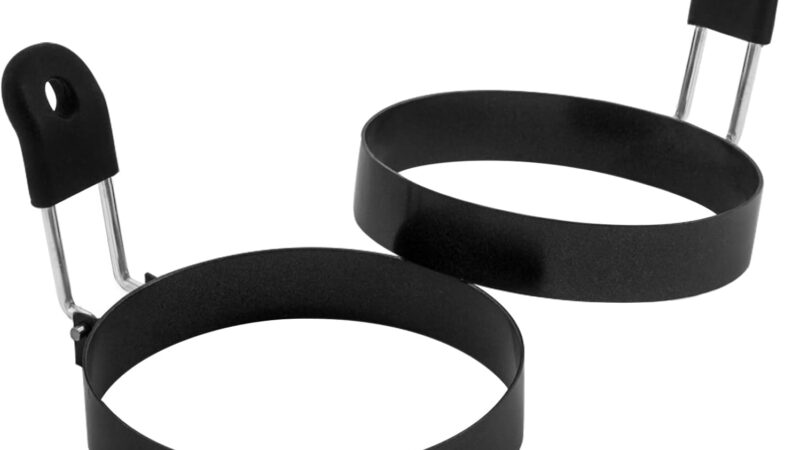
Egg rings. A thin metal hoop sits in the pan and holds the white in a circle while it cooks, so you get an egg the same shape as the muffin instead of a lacy blob hanging off the sides.
A ring isn’t foolproof on its own, though. These are the usual complaints.
“The white runs out underneath.”
Either the pan’s too cool or the ring isn’t flat on it. Warm the ring in the pan with the oil, not after. When the egg goes in, the white touching the hot metal sets in a second or two and seals the gap. A ring with a smooth, flat bottom edge matters here, and cheap bent ones leak no matter what you do.
“It’s welded to the ring.”
Grease the inside of the ring every time, even if it’s non-stick. Once the egg’s cooked, run a thin knife round the edge before lifting the ring off.
“The bottom’s crispy and the top’s still snotty.”
Splash a tablespoon of water into the pan outside the ring and cover with a lid. The steam firms up the top in about a minute without flipping. For a muffin, you’ll probably want to break the yolk with a fork first so it doesn’t run down your wrist.
“Which rings?”
The COTEY 3.5-inch egg rings come as a pair and are the right width for English muffins and most burger buns. They’re stainless steel with a non-stick coating, and the silicone handles fold down flat, which means you can lift them off a hot pan with your fingers and they slide into a drawer without catching on everything. They’re fine on cast iron and griddles too.
Two is plenty. A standard frying pan rarely fits more than two rings with room to get a knife round them.