Cut a cross into the shell of each chestnut before it goes in the oven. The risky part is doing that with a kitchen knife. Chestnuts are small, round, shiny and hard, so the blade slides off the shell, and your other hand is right there holding it.
Why bother scoring them?
There’s a lot of moisture inside a chestnut. Heat one in a sealed shell and the steam builds up until it bursts, sometimes loudly, and sprays hot bits round the oven. The cut lets the steam out. As they roast, the shell curls back along the cut too, which makes them far easier to peel.
Roasting them
Put the scored chestnuts on a tray, cut side up, and roast at about 200°C for 20 to 30 minutes, until the shells have opened back along the cross and the insides are soft. Size varies a lot, so test one. Then wrap them in a clean tea towel for five minutes. The steam loosens the thin inner skin, which is the bit that’s annoying to get off.
Peel them while they’re warm. Once they cool down, that skin sticks again and you’ll be picking at them all evening.
The tool that does the scoring for you
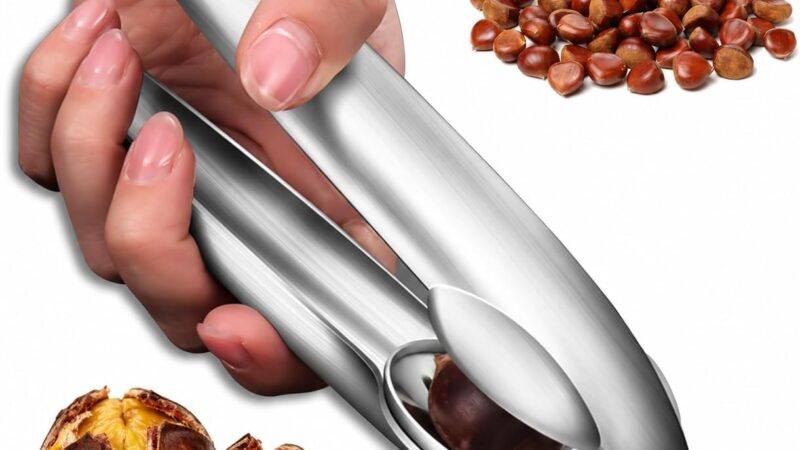
If you get through a lot of chestnuts each autumn, a chestnut cutter is worth having. The Hoxxu chestnut cutter works like a pair of tongs. One arm has a little round cup that holds the nut, the other has a cross-shaped blade. Drop the chestnut in the cup, squeeze, and the blade presses a neat cross into the top of the shell while your fingers stay well clear of it.
It’s 304 stainless steel, so it won’t rust sitting in a drawer between seasons, and the curved handles are comfortable enough to squeeze forty times in a row. It’ll crack walnuts too. For a single bag at Christmas, a serrated knife and a folded tea towel to hold the nut will do. For stuffing for a crowd, or a tray every weekend from October onwards, this is much quicker.