Dried beans, lentils, and tofu are about as cheap and nutritious as cooking gets, but they all come with a bit of friction: beans want soaking and long simmering, lentils need a good rinse to catch grit and stones, and tofu needs the water pressed out before it does anything useful in a pan. None of that friction is necessary once you have the right two or three things in the cupboard. Here’s what actually earns its space.
Quick verdict
- Best for: anyone building meals around dried pulses and tofu who’s tired of the soaking-and-babysitting routine
- Top pick: an electric multicooker with a pressure function, which turns a two-hour bean simmer into well under an hour, no soaking required
- Also worth having: a proper set of fine-mesh sieves in a few sizes, for rinsing lentils and draining beans without losing half of them down the plughole
- Skip if: you only ever cook beans from a tin, in which case the colander you already own is doing the job fine
1. An electric pressure cooker for beans and lentils
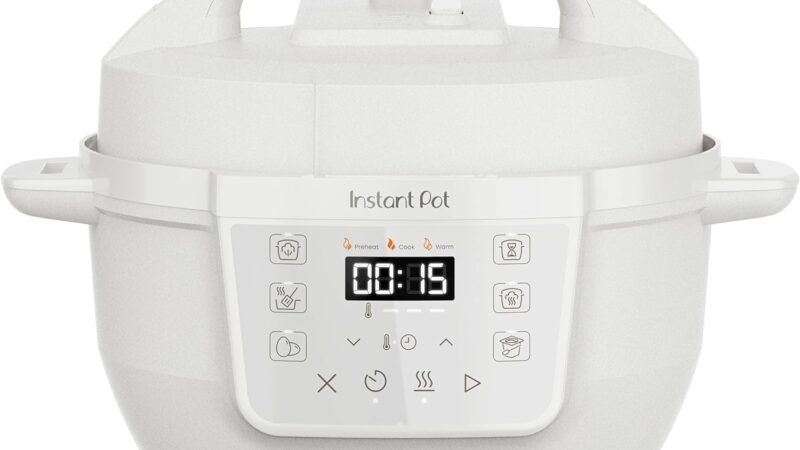
The single biggest time cost with dried beans is the soak-then-simmer routine, often a full day of planning ahead for something a tin does in seconds. A multicooker with a genuine pressure function changes that. The Instant Pot 3.8L Electric Multi-Cooker is a compact seven-in-one: pressure cook, slow cook, sauté, steam, egg, yoghurt, and keep warm, all through one push-button panel. It holds up to four portions, has a stainless steel inner pot that’s fully dishwasher safe, and the sauté function means you can soften onions and garlic in the same pot before switching it to pressure, rather than dirtying a frying pan first.
For beans and lentils specifically, the point is that pressure cooking collapses the cooking time far below a stovetop simmer, and it does it unattended, so you can get on with the rest of dinner instead of watching a pot. It’s rated 4.6 stars from Amazon UK buyers and carries an Amazon’s Choice badge.
Pros
- Genuinely compact for a multicooker, and the sauté-then-pressure workflow saves washing up a separate pan
- Dishwasher-safe stainless steel inner pot and accessories
- Simple push-button controls rather than a confusing dial or app requirement
- Doubles as a slow cooker, steamer, and yoghurt maker if you want the extra functions
Cons
- Several owners note it’s bigger and heavier on the counter than the “3.8L” name suggests
- The pressure setting only offers one level rather than a choice of low or medium, which some buyers coming from an older Instant Pot model miss
- The slow cook setting runs noticeably hotter and faster than a traditional slow cooker, so it’s not a like-for-like replacement if that’s specifically what you want it for
- A raised anti-spin fitting inside the pot, which stops the inner bowl rotating during sauté, makes lifting the bowl out slightly fiddlier than older models, though it can be removed
Check current availability on Amazon UK
2. A proper set of fine-mesh sieves for rinsing and draining
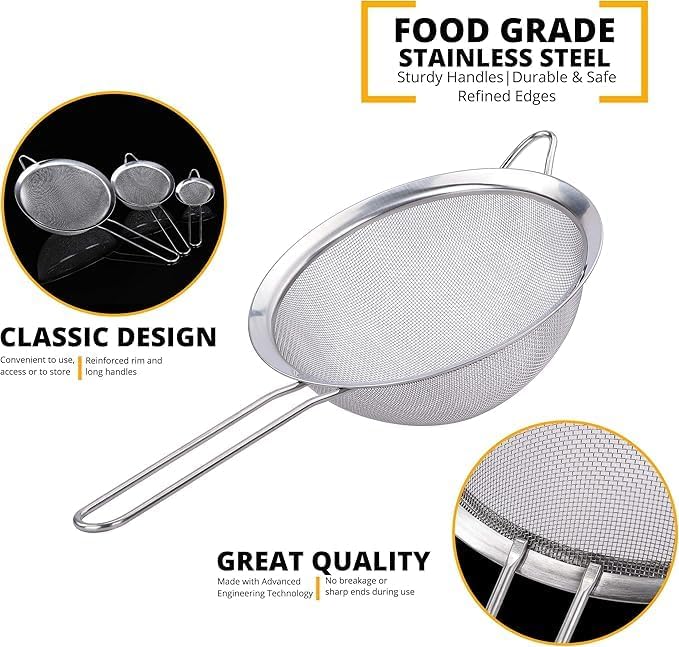
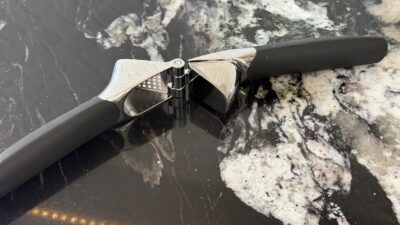
A single kitchen colander is too coarse for lentils and small beans, which slip straight through the holes. The fix is a set of finer sieves in a few sizes, which covers rinsing, draining, and even straining homemade nut milk or the curds when pressing your own tofu. The Jojeys Sieves and Strainers Set gives you three stainless steel sieves at 7cm, 12cm, and 18cm, all dishwasher safe and rated rust-resistant. The largest is the one to reach for when draining a full batch of soaked chickpeas or kidney beans, the middle size handles a standard portion of lentils or quinoa, and the smallest is fine enough for rinsing small pulses like split red lentils without losing any through the mesh.
It’s a genuinely popular listing, over 5,000 UK ratings at 4.5 stars, and one specifically worth having in three sizes rather than buying a single sieve and hoping it’s the right size for everything.
Pros
- Three genuinely useful sizes rather than one sieve trying to do every job
- Stainless steel and dishwasher safe, so no soggy mesh or musty smell building up over time
- Long handles with a resting ear design, so they can sit across a bowl or pan rim without tipping in
- Inexpensive enough that buying the set is a non-decision
Cons
- A minority of buyers report the handles working loose or the mesh developing rust spots after extended use, so it’s not a lifetime buy for everyone
- One reviewer described them as “a bit flimsy”, which tracks with the low price rather than being a fault specifically
Check current availability on Amazon UK
3. A tofu press, if tofu is a regular thing for you
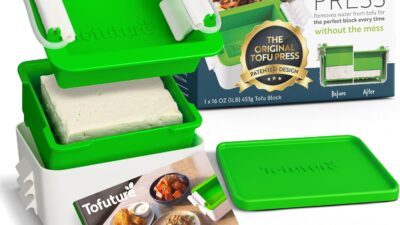
Tofu needs its water pressed out before it will crisp up or hold a marinade, and while a stack of tins on a plate works, it’s not pleasant to deal with. We covered this properly in a separate review, including which press is actually worth buying and who can happily skip it: Best Tofu Press: Do You Actually Need One?
How to use them together
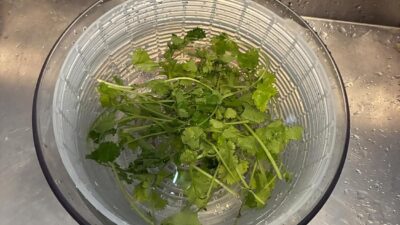
For a batch of dried beans: skip the overnight soak, add the beans straight to the pressure cooker with enough water to cover by a few centimetres, and pressure cook according to the bean, then drain the cooked batch through the large sieve. For lentils, a quick rinse through the medium sieve before cooking catches any small stones or debris that occasionally turn up in dried pulses, something a normal colander won’t reliably do. If you’re pressing your own tofu, the small sieve is useful for straining off any liquid before it goes into the press itself.
Cleaning and safety
The Instant Pot’s inner pot, lid, and accessories are dishwasher safe, but the silicone sealing ring is worth wiping and airing out after use since it can hold onto strong smells from anything spiced or garlicky. The sieves are dishwasher safe too, though a rinse straight after use stops anything starchy drying onto the mesh and making it harder to clean later.
FAQ
Do I still need to soak beans if I have a pressure cooker?
No, that’s the main advantage. Pressure cooking dried beans without soaking still gets them properly tender, just in less time than a soaked batch would take on the hob. Soaking can still shorten the pressure-cooking time slightly if you plan ahead, but it’s no longer a requirement.
Will a proper sieve set actually make a difference over the colander I already have?
For anything larger, like draining a tin of chickpeas, your existing colander is fine. The difference shows up with lentils, split peas, and other small pulses, which fall straight through a standard colander’s holes. A finer mesh sieve is the only way to rinse or drain those properly.
Can I use an electric pressure cooker for lentils too, or just beans?
Yes, most lentils cook well under pressure, and red lentils in particular cook so quickly that a pressure cooker isn’t always necessary for them specifically. It’s dried beans and chickpeas, which normally take the longest, where the time saving is most noticeable.
Do I need a separate tofu press if I already have these two tools?
Not strictly. A sieve helps drain a pressed block, but it won’t apply the sustained weight needed to get the water out in the first place. If tofu is only an occasional thing, the classic plate-and-tins method works fine. If it’s a weekly habit, a dedicated press is worth it, and our separate review covers that in more detail.
Conclusion
None of this is essential kit if you cook beans from a tin once in a while, but if dried pulses and tofu are a regular part of how you eat, an electric pressure cooker and a proper set of fine sieves remove most of the actual hassle involved. Between the two, the pressure cooker is the bigger time saver, while the sieve set is the cheaper, more obviously worthwhile buy.