If you’ve ever balanced a chopping board and a stack of tins on top of a block of tofu, you already know the problem a tofu press is trying to solve. Tofu comes packed in water, and until most of that water is out, it won’t crisp up, won’t hold a marinade properly, and tends to fall apart in the pan. The question is whether a dedicated gadget is actually necessary, or whether the plate-and-books method is good enough. I looked closely at one of the most-bought tofu presses on Amazon UK, the Tofuture, to work out where the line actually sits.
Quick verdict
- Best for: anyone who presses tofu or paneer regularly and is tired of a wobbly stack of plates and cans
- Top feature: the self-contained design means no drips on the counter and no soggy tea towels
- Watch out for: a minority of buyers report the elastic bands or handles wearing out or snapping after repeated use
- Skip if: you only cook with tofu occasionally, or you regularly need to press blocks bigger than a standard 300-400g pack
What it does
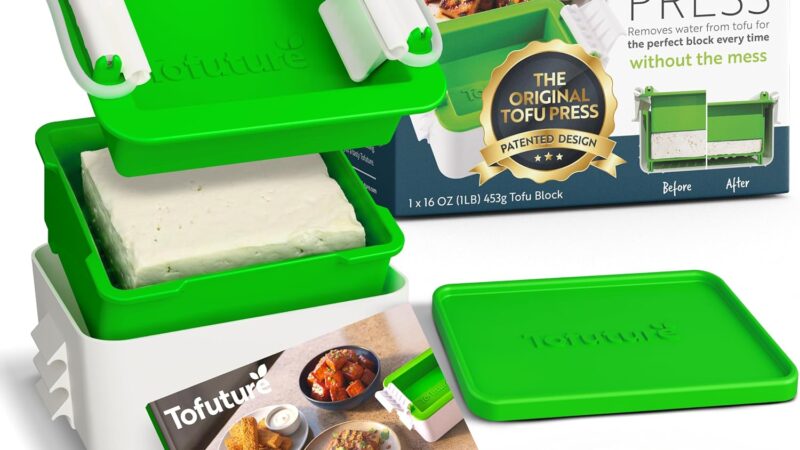
The Tofuture is built from three stacked parts: an outer tray that collects the water, a perforated inner tray that holds the tofu, and a pressing lid with two elastic bands that hook onto catches on the outer tray at three different tension levels. You put the block in, hook the bands onto whichever catch gives the pressure you want, and leave the whole thing in the fridge. There’s no need to go back and tighten anything halfway through, which is the main thing it improves on compared with the DIY method.
It’s made from BPA-free polypropylene, is SATRA-certified for food contact, and is dishwasher safe. The kit includes a silicone lid as well, so once the tofu is pressed you can pour in a marinade and use the same container to store it in the fridge rather than dirtying a second dish. A spare set of elastic bands comes in the box too, which is a sensible inclusion given they’re the one part that takes real wear.
Pros
- Genuinely mess-free: the water drains into the sealed base rather than running off a plate onto the counter
- Three pressure settings without needing to check or adjust anything mid-press
- Doubles as a marinating and storage container thanks to the included silicone lid
- Comes with a spare set of bands, which matters given they see the most wear
- Fits in the fridge easily, so you can press for hours or overnight without it taking over the counter
Cons
- A number of reviewers report the elastic bands or handles breaking, mostly after repeated use over time rather than on first use, though the seller has a track record of replacing these under warranty
- The standard size is built around an 8-16oz block, and at least one buyer wanted a larger option to fit bigger blocks of tofu without portioning it first
- The bands can be fiddly to hook on with one hand until you get used to the motion
Who it’s for
This makes the most sense if tofu, paneer, or firm plant-based proteins are a regular part of your cooking rather than an occasional experiment. If you’re pressing tofu once every few months, the classic method of wrapping it in a tea towel and weighing it down will do the job for free. But if you’re doing it weekly, the time saved by not babysitting a wobbling stack of tins, and not having a damp tea towel to deal with afterwards, adds up quickly.
How to use it
Drain the tofu block from its packaging first, then set it into the perforated inner tray. Hook the elastic bands onto the lightest catch to start, especially with softer or extra-firm blocks that haven’t been pressed before. A short 15-30 minute press is enough for things like a cheese-style sauce or a soft filling; an hour or two suits pies and quiches; and anything going into a stir-fry or onto a skewer benefits from four hours or more, ideally left overnight in the fridge. You don’t need to increase the pressure partway through, just leave it and come back when you’re ready to cook.
Cleaning and safety
All three parts are dishwasher safe, though a rinse under warm water is usually enough since the only residue is the tofu’s own water. Give the elastic bands a quick check every so often for signs of stretching or cracking, since that’s the part most likely to need replacing eventually, and the spare set in the box means you’re covered when it happens.
FAQ
Do I really need a tofu press, or will books and a plate work fine?
Books and a plate will get water out of tofu, no argument there. A dedicated press is really about convenience and consistency: no risk of the stack toppling, no wet tea towel to wring out afterwards, and a repeatable result each time. If you press tofu often, that convenience is worth more than the cost of the gadget.
How long should I actually press tofu for?
It depends what you’re making. A short 15-30 minute press works for softer applications like a cheese-style sauce. An hour or two suits baked dishes like pies or quiches. For stir-fries, skewers, or anything going in hot and fast, four hours to overnight gives the firmest, driest result.
Can I use this for anything other than tofu?
Yes. It works just as well for pressing paneer, and the same principle applies to any firm curd that needs excess whey or water removed before cooking.
What happens if the elastic bands wear out?
The Tofuture comes with a spare set in the box, so a first replacement is already covered. Beyond that, it’s worth keeping an eye on them and replacing at the first sign of cracking or loss of tension, since that’s the part most likely to need attention over the life of the press.
Conclusion
A tofu press isn’t essential kit for a kitchen that only sees tofu now and then, but if it’s a regular part of how you cook, something like the Tofuture takes away the mess and guesswork of the DIY method and gives you a genuinely repeatable result. The included spare bands and the marinating lid are the kind of small details that make it feel like it was designed by people who actually cook with tofu rather than just sell the gadget.
Check current availability on Amazon UK
—