A couple of generations ago, bakers sifted everything, twice, from a height. Most recipes still tell you to, and most of us quietly skip it when we’re in a hurry. So does it matter?
Sometimes. Flour used to need sifting to get out lumps and the odd bit of husk. Bagged flour from the supermarket is far cleaner now, so for bread, pastry, crumble or biscuits you can tip it straight in and nobody will know.
It still earns its keep in three places:
- Light sponges. For a Victoria sponge, a Swiss roll or anything where you fold flour into whisked eggs, sifted flour goes in as a fine, even layer and folds through with fewer strokes. Fewer strokes means you knock out less air.
- Mixing dry ingredients. Sifting flour with baking powder, cocoa or spices spreads them evenly, so you don’t bite into a pocket of bicarb.
- Cocoa and icing sugar. Both clump badly in the packet, and those lumps don’t beat out. They have to be sifted.
Sieve or crank sifter?
A fine sieve and the back of a spoon works, and if you’ve already got one, carry on. The trouble is the mess. Tapping a sieve over a bowl sends a fair bit of flour over the worktop, and a wide sieve over a narrow bowl is asking for it.
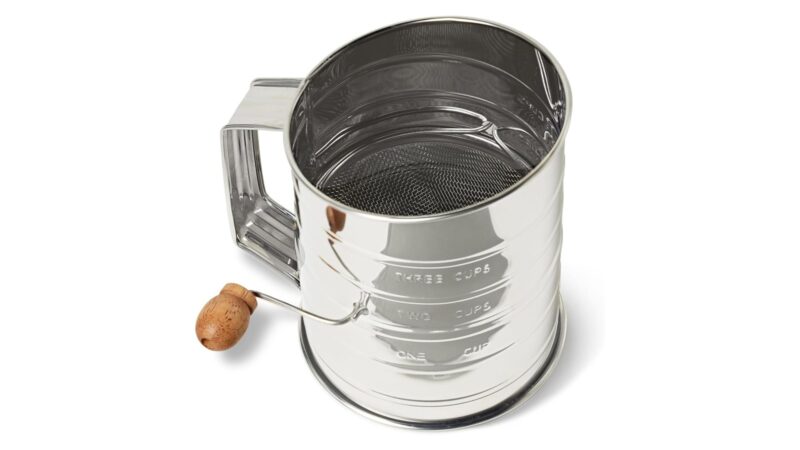
A crank sifter is a metal mug with a mesh floor and a handle on the side. You fill it, hold it over the bowl and turn the crank. Wires sweep across the mesh and push the flour through, straight down, exactly where you’re pointing it. It’s a tidier way to do the same thing, and the flour lands in the bowl instead of round it.
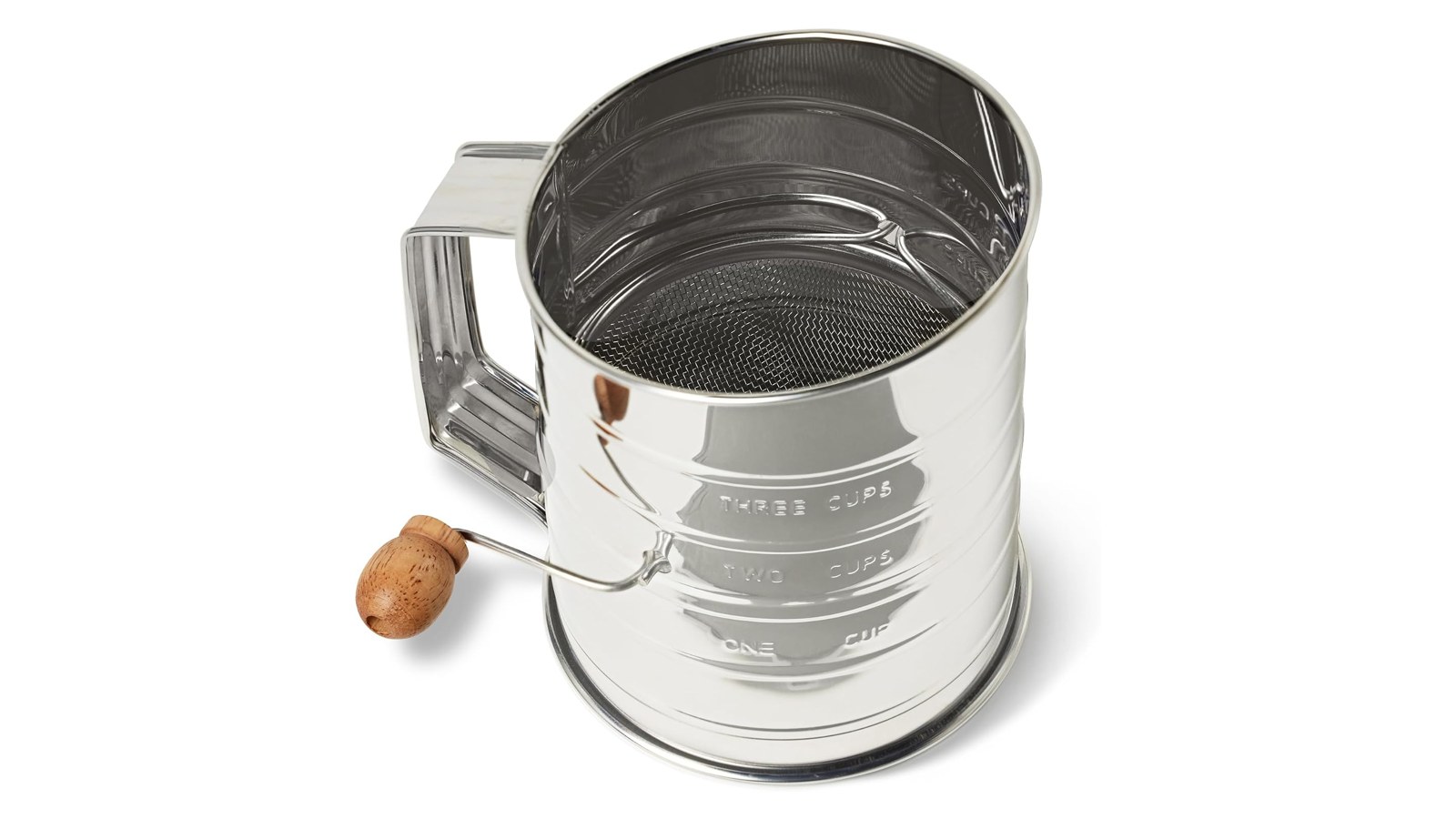
The Amazon Basics flour sifter is about as simple as they come, and it’s well rated. It’s stainless steel with a fine mesh, and a two-wire agitator does the sweeping when you turn the crank. It stands roughly 14cm tall and weighs about 180g, so it’s light in the hand even when it’s full. Unusually for a sifter, the listing says it’s dishwasher safe. I’d still let it dry completely before it goes back in the cupboard, because damp flour dries like glue in fine mesh.
One quirk for British bakers: it holds three cups, and the measuring marks on the side are in cups too. Unless you bake from American recipes, ignore them and weigh your flour on the scales first, then tip it in.
It handles icing sugar as well, though for a light dusting over finished bakes a small shaker gives you more control. There’s more on that in the post about dusting mince pies.
If you bake sponges more than a few times a year, a crank sifter is a small, cheap upgrade that keeps flour off the worktop. If you mostly make bread and crumbles, your sieve is fine.