A normal frying pan will do. I’ve made plenty of pancakes in a battered old non-stick pan and nobody has ever sent one back. But if you make crêpes often, say a lazy weekend breakfast or a stack of lemon and sugar ones on a cold evening, a proper crêpe pan makes them thinner and a lot easier to flip.
Flat versus sloped
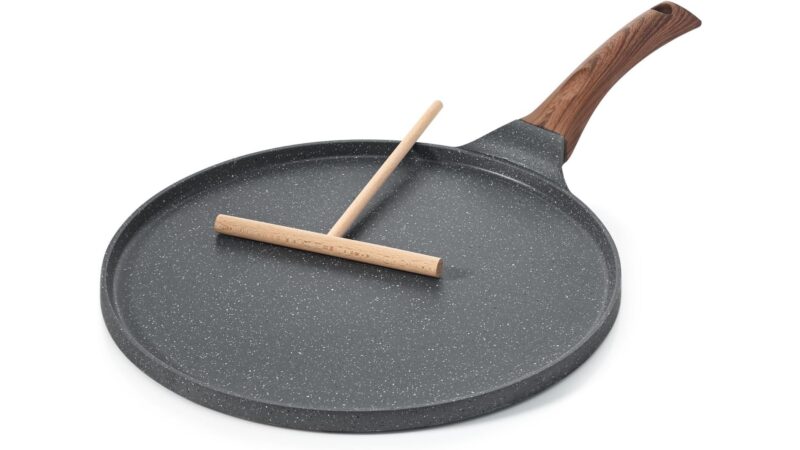
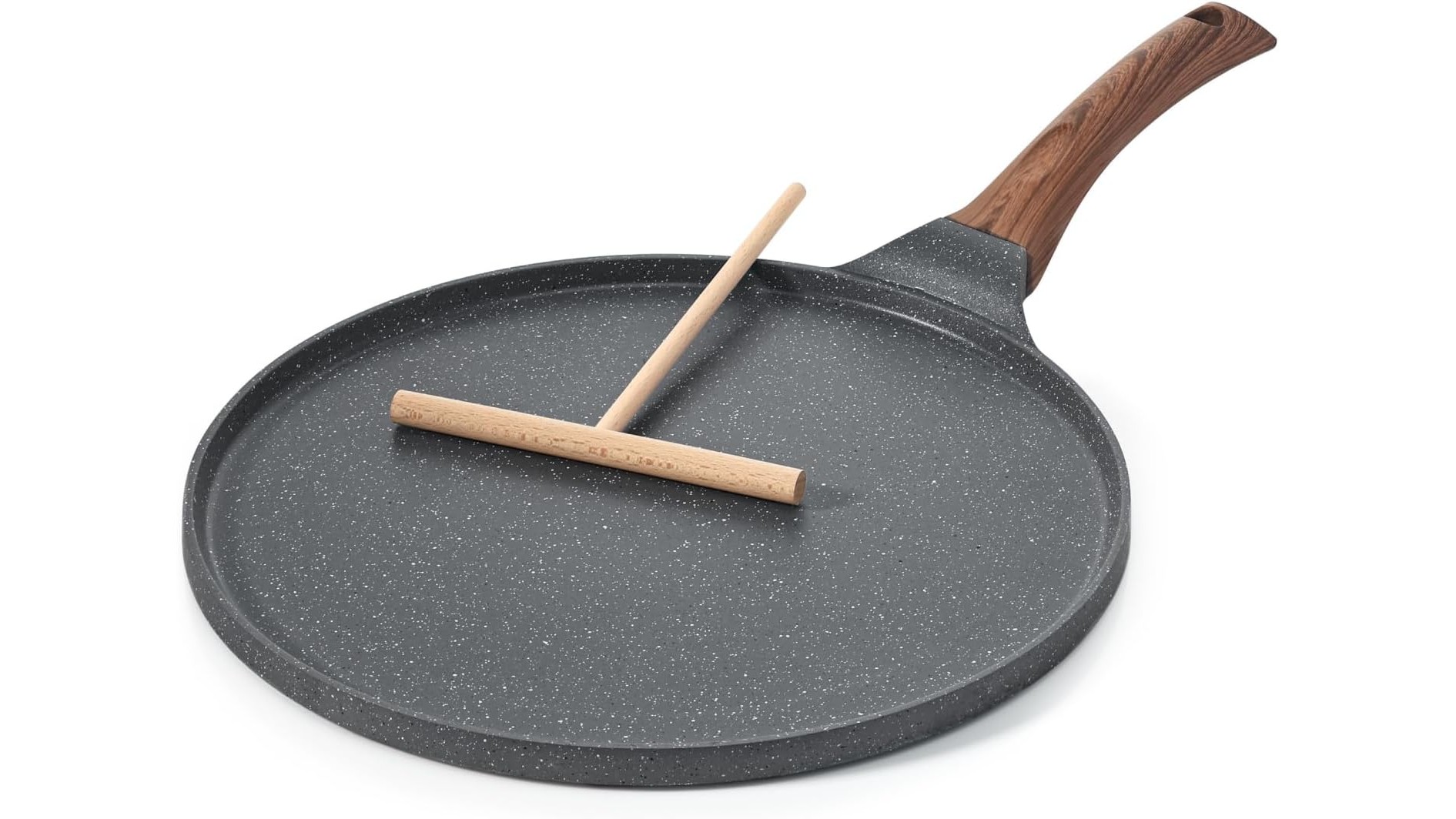
It’s all about the sides. A frying pan has tall, sloping walls, so the batter you swirl round collects in a thicker ring at the edge and the middle stays thinner. Getting a spatula under it means poking at a slope. A crêpe pan is almost completely flat with a very low lip, so the batter spreads to an even thickness right to the edge, and you can slide a spatula straight underneath.
The other difference is heat. Crêpes need the whole surface at the same temperature. A flat, thick base gives you a crêpe that browns evenly instead of one with a pale ring and a scorched middle.
Better crêpes in any pan
- Rest the batter for half an hour. The bubbles settle and it spreads more smoothly.
- Wipe the pan with a piece of kitchen roll dipped in oil, rather than pouring oil in. You want a film, not a puddle.
- Expect to bin the first one. It’s tradition, and it tells you if the heat is right.
- Use a jug. It’s far easier to pour the batter cleanly from a jug than from a ladle.
SENSARTE’s 26cm pan
The SENSARTE 26cm crêpe pan has thousands of ratings on Amazon, which is a lot for a pan. It’s die-cast aluminium with a stainless steel base, so it works on induction as well as gas and electric. The lip is only about 1.3cm high, enough to stop batter running off the edge but low enough that it doesn’t get in the way when you flip.
It weighs 870g, which sounds like nothing until you’ve tried flipping a crêpe one-handed in a heavy cast iron pan. The handle is Bakelite, so it stays cool, and there are no rivets on the inside, which makes it quick to wipe clean. One thing to know: it’s only oven safe to 150°C, so this isn’t a pan for finishing things off in a hot oven.
26cm is a good size for a standard crêpe. The flat surface suits flatbreads, tortillas and dosa too, so it ends up being the pan for Friday-night wraps as well as Sunday-morning crêpes.