You can do everything right with roast potatoes, from par-boiling to roughing up the edges and using really hot fat, and still end up with a tray of pale, slightly soggy ones. When that happens, it’s worth looking at the tin.
Three things that ruin roasties
Crowding. This is the big one. If the potatoes are packed in touching each other, they steam instead of roasting. Each one needs a bit of space so the hot air and fat can get at it. For a big Christmas lunch, two trays nearly always beat one heaped tray.
The wrong material. Glass and ceramic dishes are lovely for a lasagne, but they take ages to heat up and never get the fat as hot as metal does. You want a metal tin that gets properly hot in the oven.
Sides that are too tall. A deep roasting pan built for a turkey traps steam around the potatoes. Something around 5cm deep holds the fat without walling in the moisture.
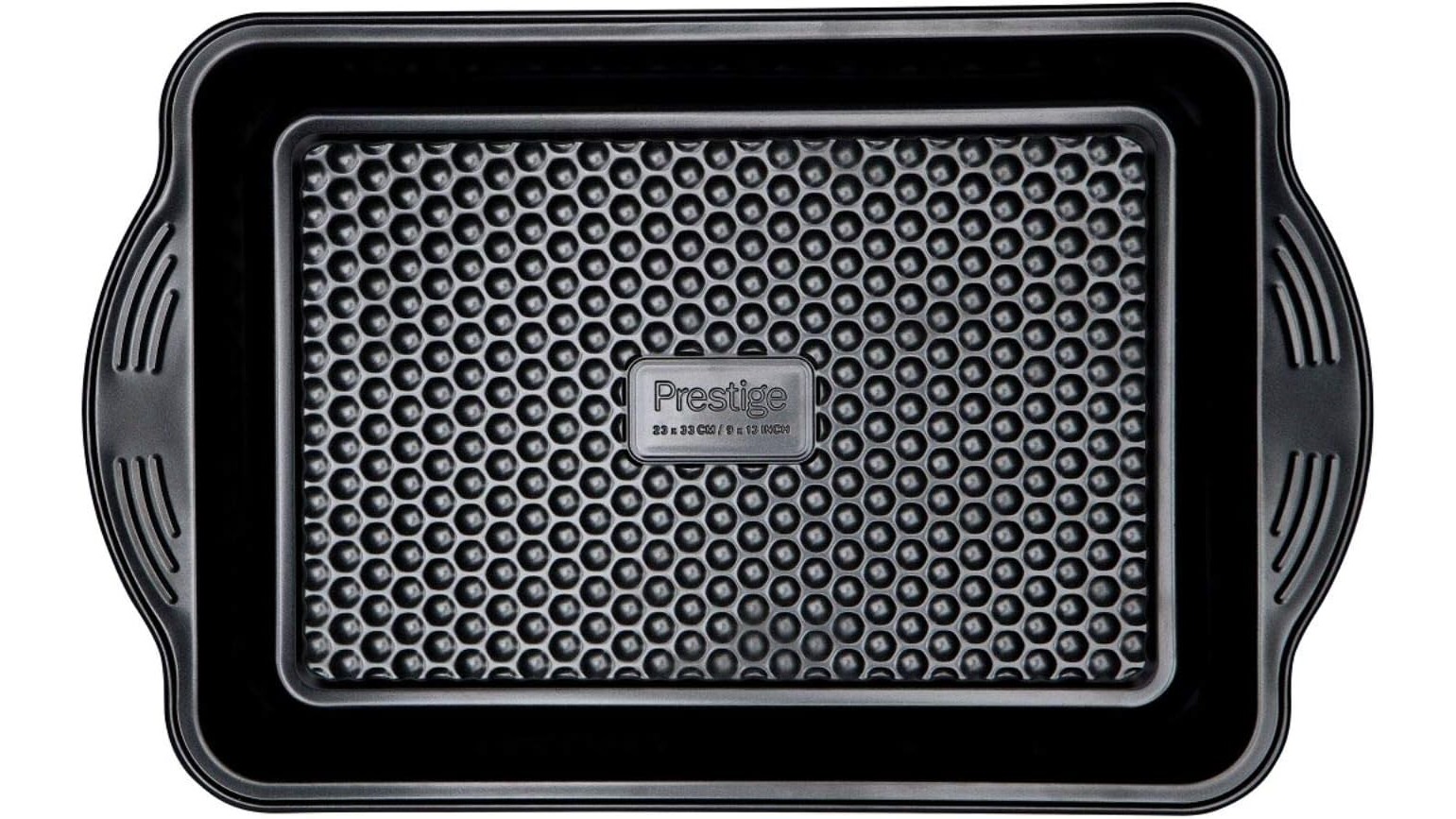
The one I’d buy
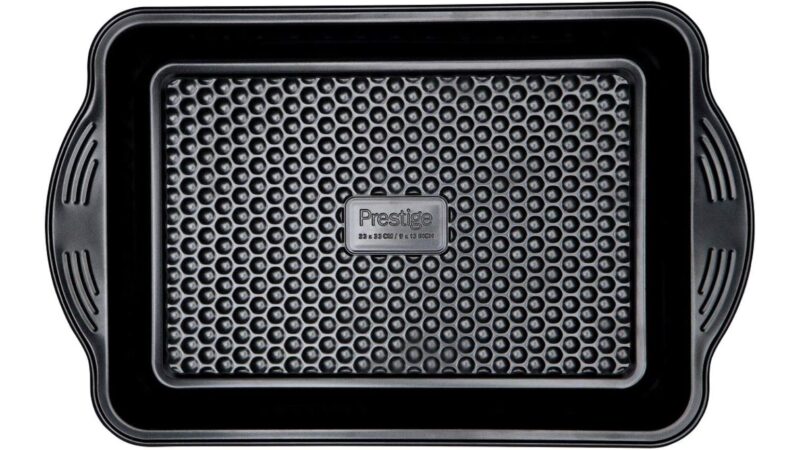
The Prestige Aerolift roasting tray hits all three. It’s carbon steel, so it heats up quickly, and it’s 5cm deep. Inside it measures 33 x 23cm (41 x 25cm including the handles), which is a good size for potatoes for three or four people in a single layer.
The base is non-stick and covered in little raised dimples, which Prestige calls a “cushioned base”. The idea is that food releases more easily, and in practice it means the bottom layer of potatoes isn’t welded to the tin. The handles are oversized too, which you’ll be grateful for when you’re shaking a tray of smoking-hot fat. Prestige backs it with a 5 year guarantee. It’s listed as dishwasher safe, though like any non-stick it’ll last longer if you mostly wash it by hand.
It’s not a heavy, fancy tin, and that’s fine. For roast potatoes, what matters is that it gets hot fast and gives them room.
Getting the most out of it
Put the tray in the oven with your fat while the potatoes par-boil. Goose fat and beef dripping are traditional, but a neutral oil works too. By the time the potatoes are drained, steamed dry and roughed up, the fat should be smoking. When you tip them in, listen. If there’s no sizzle, the fat wasn’t hot enough, and they’ll soak it up rather than fry in it.
After that, leave them alone more than you think you should. Turning them once or twice is plenty, because they need time sat in the fat to build a crust. If you’re making a full roast, our guide on whether you need a roasting rack covers the meat side of things.