Yes, and it’s one of the cheapest things you can buy for your kitchen that actually makes a difference. If you’ve followed a recipe exactly and the cake still sank, the biscuits burnt or the bread was pale, there’s a decent chance your oven isn’t at the temperature on the dial.
Why the dial isn’t telling you the truth
An oven dial isn’t really a thermometer. It sets a thermostat, which switches the heating element on and off to stay roughly around that number. How close it gets depends on the oven, its age, and where the sensor sits inside it. It’s not unusual for a dial to be out by a noticeable amount, and you’d never know without measuring.
Ovens also have hot spots. The back is often hotter than the front, and the top shelf can be hotter than the bottom, especially in ovens without a fan. That’s why one side of a tray of biscuits browns before the other.
For most cooking this doesn’t matter much. A casserole doesn’t care if it’s at 170 or 185. Baking does care. Cakes rise and set within a fairly narrow temperature range, so being out by 15 or 20 degrees is enough to sink a sponge or dry out the edges.
The one I’d buy
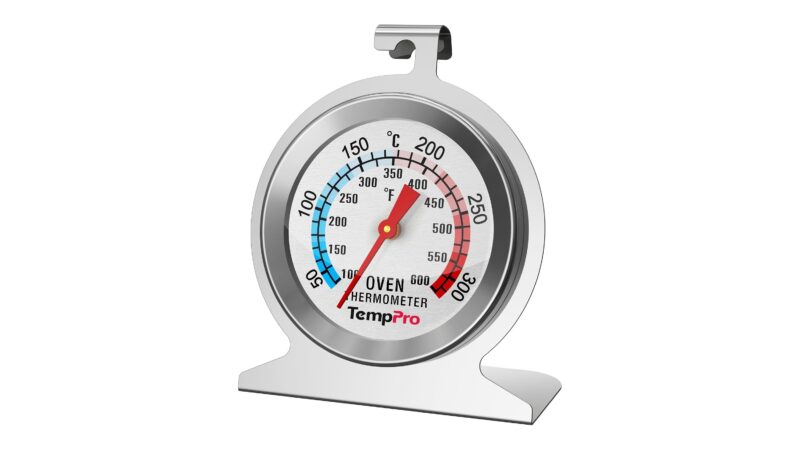
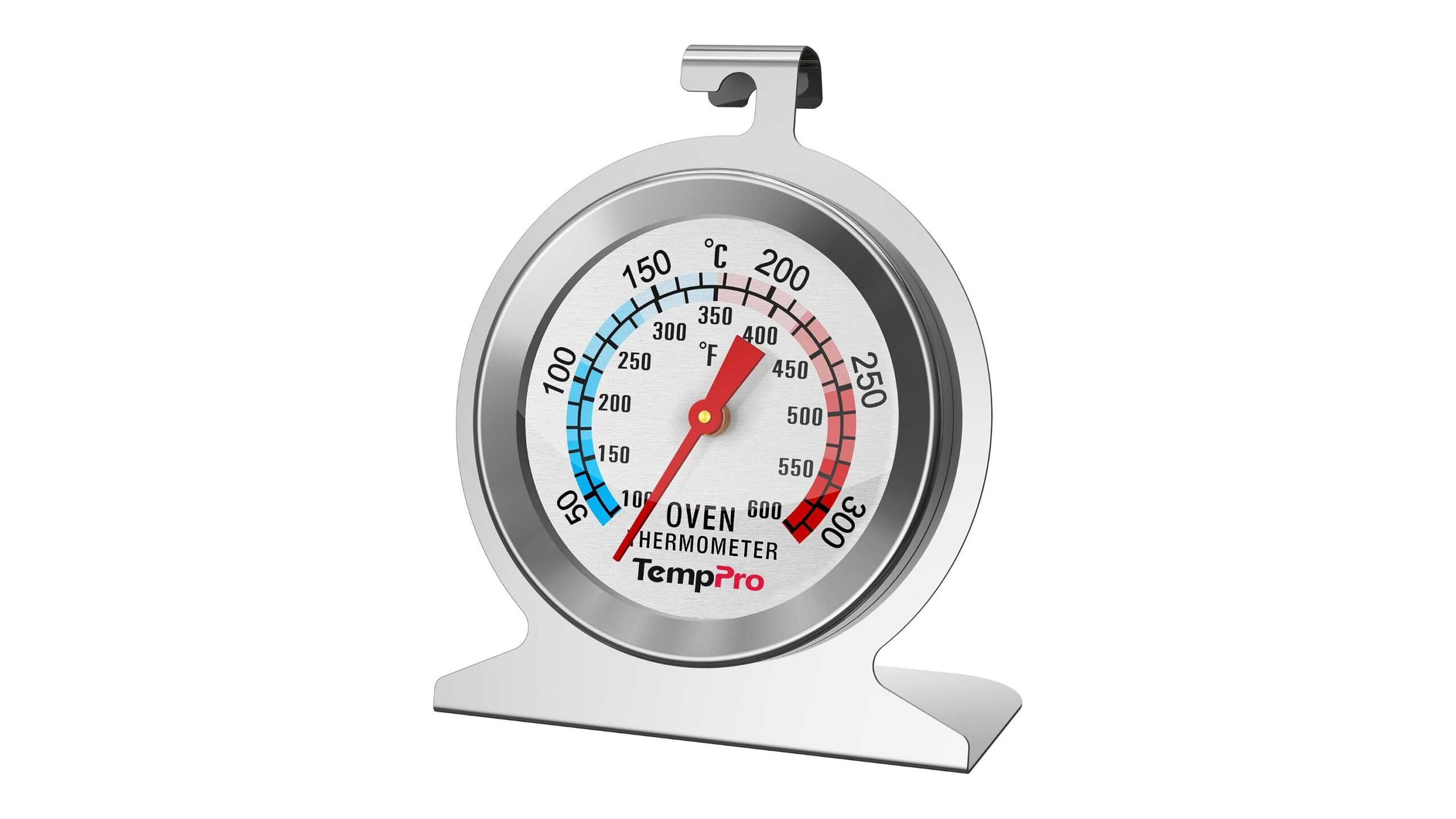
You don’t need anything fancy. A simple dial thermometer that lives in the oven does the job. The TempPro Oven Thermometer is the one I’d go for, and it has well over a thousand reviews on Amazon UK. The listing says the brand used to be called ThermoPro, so you might get either name on the box.
From the listing:
- Reads from 50 to 300°C, with Fahrenheit on the same dial
- Stainless steel with a tempered glass face, so it’s fine to leave in the oven
- No battery, so it’s always ready
- About 7.6cm across, with two hooks and a flat base, so you can hang it from a shelf or stand it up
- Bold numbers with blue and red zones, which helps when you’re reading it through a steamed-up oven door
How to actually use it
- Put it on the middle shelf, roughly in the centre, where your cake tin would go.
- Set the oven to 180°C and leave it a good 20 minutes after the light goes off. Ovens often say they’re ready before they really are.
- Read it through the glass, without opening the door if you can.
- Compare. If it says 165 when the dial says 180, you know to turn yours up by about 15 for baking.
It’s worth repeating that at a couple of different settings, because some ovens are fine at low temperatures and drift at high ones. Then move it to the back, the front and the top shelf to find your hot spots.
Is it worth it?
For anyone who bakes, yes. It’s a small, inexpensive thing, and it means you stop guessing every time you follow a recipe. If you’ve been blaming yourself for cakes that won’t behave, it might not be you at all.
If your problem is specifically biscuits burning underneath, the oven might not be the only cause. Have a look at why biscuits burn on the bottom too.