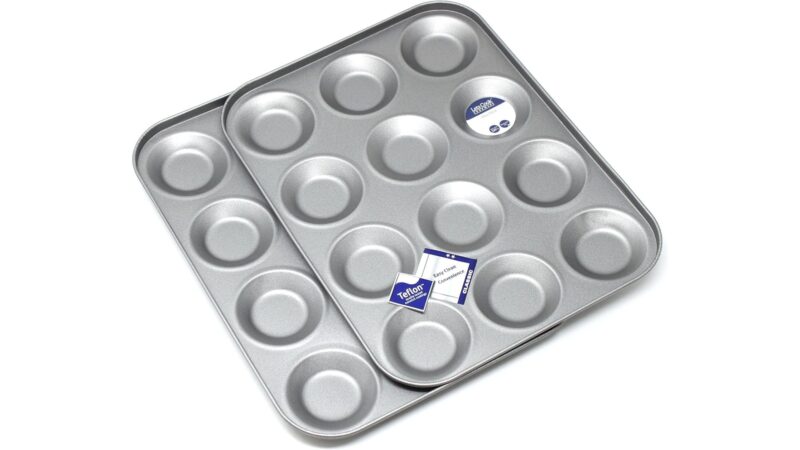
Short answer: a shallow 12-hole bun tin. Not a muffin tin, and not those fluted individual tart cases you have to fish out one by one. Mince pies want a wide, shallow cup with sloping sides, so the pastry crisps up underneath and the pie lifts out in one piece.
Why the tin matters more than you’d think
Most mince pie disasters come down to the tin. A deep muffin tin gives you a thick wall of pastry, a pale base and too much mincemeat, which then bubbles over and welds the lid to the tray. A tin that’s too flimsy flexes when you pull it out of the oven and cracks the tops. And if the coating’s tired, you end up prising each pie out with a butter knife and leaving half the base behind.
What you want is a tray that’s shallow, rigid, and properly non-stick. That’s it. There’s no clever technology here.
The one I’d buy
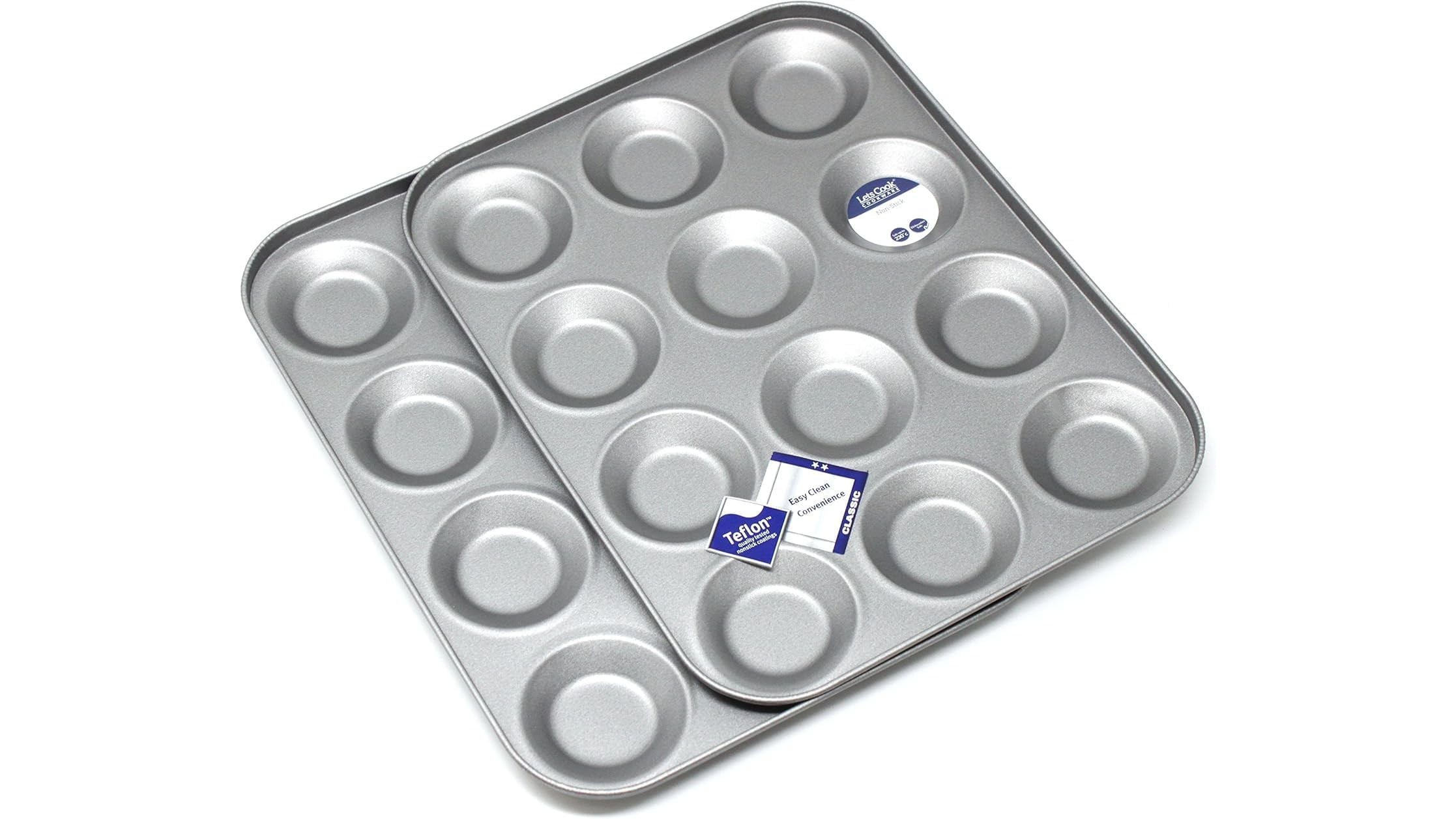
The Lets Cook 12-hole mince pie and bun tin twin pack does all of that, and you get two trays, which matters more than it sounds. Here’s what the listing says:
- Two trays, each with 12 holes
- Each tray is 31 x 24 x 1.4cm
- Cups are 6.6cm across the top and 4.5cm at the base, which is the standard size for mince pie and fairy cake cases
- Carbon steel with a Teflon non-stick coating
- Made in Britain
That 1.4cm depth is the point. It’s deep enough to hold a decent spoonful of mincemeat, but shallow enough that the base actually browns. The sloped sides help too, because the pies slide out rather than sticking at the rim.
Why two trays?
Because mince pies are a production line. While one tray’s in the oven, you’re lining the other. Then you swap. With a single tray you’re waiting for it to cool before you can load it again, and a batch of 24 suddenly takes all afternoon. If you’re making them for a school fair or a houseful of relatives, the second tray pays for itself in time saved.
The same trays do jam tarts, fairy cakes and little Bakewell tarts for the rest of the year, so they won’t spend eleven months in the back of a cupboard.
A few tips that make a real difference
- Roll the pastry thin and even. About 3mm is right. If you struggle with that, a rolling pin with spacer rings helps a lot. We covered one in our post on rolling pastry to an even thickness.
- Don’t overfill. A heaped teaspoon of mincemeat is plenty. Any more and it boils over.
- Chill the filled tray for 15 minutes before it goes in. Cold pastry holds its shape better.
- Put the tray on a hot baking sheet. The extra blast of heat from underneath is the easiest fix for pale bases. There’s more on that in how to stop a soggy bottom.
- Leave them in the tin for five minutes after baking, then lift them out. Straight from the oven they’re too soft and will crack.
Looking after the coating
Non-stick lasts much longer if you treat it gently. Wash it by hand with a soft sponge, skip the metal skewers when you’re loosening a stubborn pie, and dry it properly before it goes away so the rolled edges don’t rust. Do that and a decent tin will see you through a good few Christmases.