If you like strong coffee but can’t face a bean-to-cup machine taking up half the worktop, a moka pot is worth a proper look. It’s a little aluminium jug that sits on the hob, and it’s been making coffee in Italian kitchens since the 1930s. No pods, no descaling programme, no plug.
It’s worth being upfront about what it isn’t, though. A moka pot doesn’t make true espresso. It brews under far less pressure than an espresso machine, so you get something closer to a very strong, rich filter coffee, with no thick crema on top. If you’re after café-style flat whites, it’ll probably disappoint. If a short, punchy coffee or a big milky one made with strong coffee sounds right, it’s brilliant.
How it actually works
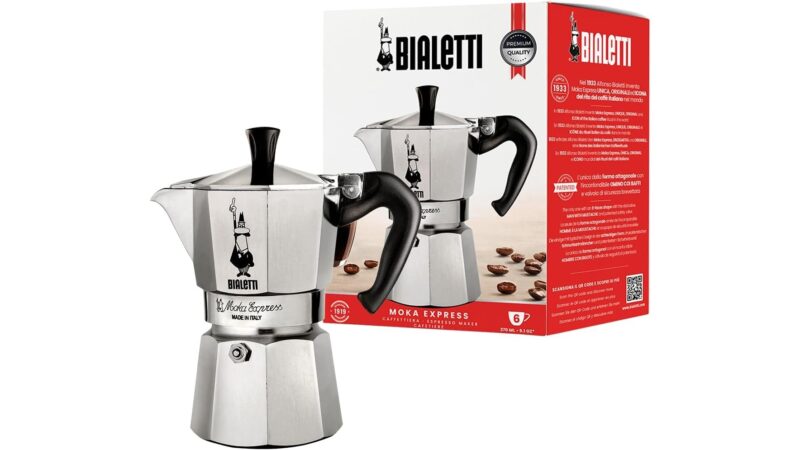
There are three parts. Water goes in the bottom chamber, ground coffee goes in the funnel-shaped basket above it, and the finished coffee collects in the top jug. As the water heats, steam pressure pushes it up through the grounds. When you hear it start to gurgle and splutter, it’s done. Take it off the heat straight away, because leaving it on is how you end up with bitter, burnt-tasting coffee.
A few things make a big difference:
- Fill the water to just below the safety valve, not over it.
- Fill the basket level and don’t tamp it down. Packing it tight is an espresso-machine habit and it just chokes a moka pot.
- Use a medium-fine grind, a bit coarser than espresso. Supermarket “moka” or “espresso” ground coffee is usually close enough, though fresh beans through a decent grinder are a step up.
- Medium heat. Blasting it on high rushes the brew.
The one to get: the Bialetti Moka Express
There are loads of cheaper copies, but the Bialetti Moka Express is the original octagonal design and it’s still the one we’d recommend. It’s aluminium with a safety valve on the boiler, and spare seals and filters are easy to find, which matters if you want it to last years.
Sizing confuses people. The “cup” in the name means a small espresso cup, not a mug. The 6 cup version holds up to 300ml in the boiler, which in practice is enough for two people who top it up with hot milk, or one person who really likes their coffee. If it’s only ever you, the 3 cup is plenty.
The catches
It isn’t dishwasher safe. Bialetti says to rinse it with plain water only, and the dishwasher dulls the aluminium and affects the taste. Honestly, a rinse and leaving it to dry in pieces is all it needs.
It also won’t work on an induction hob by itself. Bialetti makes an adapter plate for that, so check your hob before you buy. Gas and electric are fine.
And the first couple of brews from a new pot tend to taste a bit metallic. Make two or three and pour them away, and it settles down.
So, is it worth it?
For anyone who drinks a couple of strong coffees a day and doesn’t want another appliance, yes. It’s small enough to live in a cupboard, it’ll never need a software update, and there’s something quite nice about the gurgle on a cold morning.
If you mostly drink lattes and want proper foam on top, though, you’ll still want a frother alongside it, and at that point a small espresso machine starts to make more sense.