
You know the sound. Ten minutes into roasting potatoes at 220°C there’s a loud bang from the oven, and when you open the door the tray has twisted into a shallow propeller with all the oil pooled in one corner. Cheap thin trays do this all the time, and it’s the main reason it’s worth spending a bit more on one good tray instead of a stack of flimsy ones.
Why baking trays warp
Thin metal heats unevenly. The part touching cold food stays cooler than the bare edges, the metal expands by different amounts in different places, and the tray buckles to relieve the stress. Running it under a cold tap while it’s hot makes it worse. The fix is mostly about thickness and a rigid edge, not a fancy coating.
The one I’d buy: Samuel Groves 16″ aluminium tray
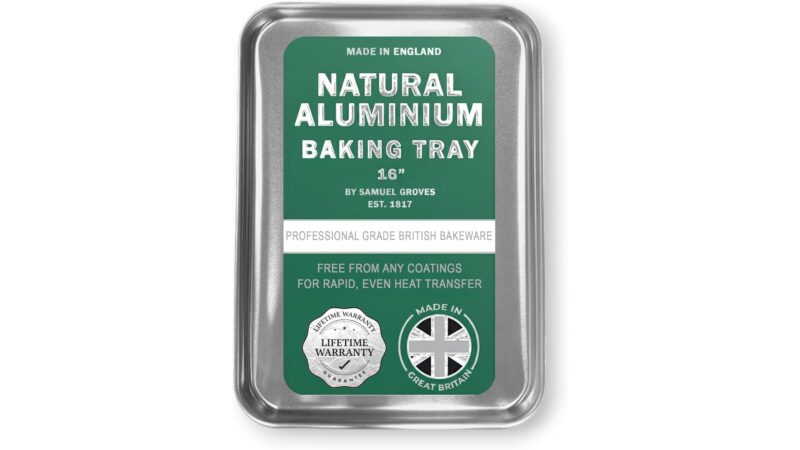
The Samuel Groves Professional Aluminium Baking Tray is the kind of plain, heavy tray you’d find in a commercial kitchen. Samuel Groves has been making bakeware in Birmingham since 1817, and this one is still made in England.
- 1.6mm pure aluminium. Thick enough to stay flat, and aluminium spreads heat well, so you get fewer pale middles and scorched edges on a tray of biscuits.
- Uncoated. No non-stick layer, so nothing to scratch, flake or wear off over the years.
- Sold as warp-resistant, with a rigid construction meant for heavy commercial use.
- Lifetime guarantee on the aluminium range.
- Size: 41.9 x 30.5 x 1.9cm, and it weighs 630g.
Things to know before you order
Measure your oven. Seriously. At almost 42cm long, this won’t fit every oven, especially smaller built-in ones and the second oven on some range cookers. Check the width of your shelf and leave a little room for air to move round the edges.
It isn’t non-stick. For biscuits, meringues and anything sugary, line it with baking paper or a silicone mat (we’ve looked at whether a silicone mat beats baking paper). For roast veg and potatoes, a decent glug of oil does the job.
Hand wash only. The listing says it isn’t dishwasher safe, and dishwasher tablets are known to dull and discolour bare aluminium. Warm soapy water and a soft sponge is all it needs.
Go easy on acidic food. Long, slow roasting of tomatoes or anything with a lot of vinegar straight on bare aluminium can discolour the tray. Lining it fixes that too.
Is a heavier tray really worth it?
If you only bake a frozen pizza now and then, probably not. If you roast every Sunday and bake through December, a tray that stays flat and heats evenly makes a real difference. Biscuits colour more evenly, roasties don’t slide into one corner, and you stop replacing trays every couple of winters. If your biscuits keep burning underneath, we’ve also got a piece on why biscuits burn on the bottom before the tops are done, and the tray is often part of the answer.


