Rice, peas, bits of onion skin, coffee grounds, the last spoonful of porridge. All of it goes down the plughole while you’re washing up, and most of it gets stuck somewhere in the pipe. Grease catches on it, and a few weeks later the sink drains slowly and there’s a smell you can’t place.
Plumbers will tell you the cheapest fix is the boring one: stop the solids getting in. Scrape plates into the food bin first, wipe greasy pans with kitchen roll, and put a strainer in the plughole to catch what’s left.
The one I’d go for
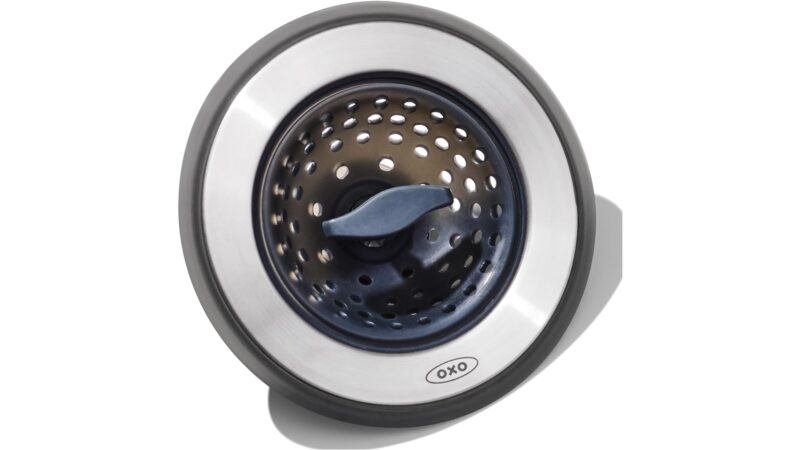
The OXO Good Grips 2-in-1 Sink Strainer & Stopper has a stainless steel top and a soft silicone basket underneath. When it’s full you lift it out over the bin and push the basket inside out, so the scraps drop straight off. It also goes in the dishwasher. Compare that with the basic metal mesh ones, where rice gets wedged in the holes and you end up picking it out by hand. The OXO strainer is listed on Amazon here.
The “2-in-1” part is a twist tab in the middle. Turn it one way and water drains through the basket as normal. Turn it the other way and it seals the plughole, so you can fill the sink for washing up without needing a separate plug. There’s nothing to install; it just sits in the drain.
Measure your plughole
OXO design it for standard American kitchen drains, and the top is 4.4 inches across. Plenty of UK kitchen sinks have a similar sized plughole, but some, especially smaller prep bowls and older sinks, are narrower. Measure yours before ordering.
Also, a strainer only catches solids. It won’t do anything about fat poured down the sink, which sets in the pipes as it cools. That still needs to go in the bin once it’s solid.
One habit that helps alongside it: once a week, run the hot tap for a minute after the washing up. It won’t shift a real blockage, but it rinses through whatever soap scum and grease got past.